
While paid advertising can be effective, it’s often challenging for chiropractors due to frequent ad rejections in the health sector. Email marketing, on the other hand, offers a more consistent, hassle-free, and cost-effective way to build trust, educate patients, and boost patient loyalty.
In this guide, you’ll learn how to:
- Proven email strategies to retain current patients and attract new ones
- Implement 9 essential email types that address different stages of the patient journey, from welcome series to reactivation campaigns
- Step-by-step automation workflows that save hours while growing your practice
P.S., we tested all of these strategies using Campaign Monitor, so if you want to skip the guesswork and implement a system that delivers results for healthcare providers, you’ll find everything you need right here.
TL;DR
- Welcome Series: Send 4 emails over 2 weeks covering practice intro, visit prep, and treatment plan.
- Appointment Reminders: Send reminders 3 days before, 24 hours before, and morning of appointments.
- Post-Visit Follow-ups: Include personalized treatment options, home exercises, and direct review links.
- Wellness Newsletters: Share valuable content focused on spinal health, posture, and wellness.
- Reactivation Campaigns: Target chiropractic patients inactive for 90+ days with special offers.
- Special Promotions: Share seasonal specials with educational context and countdown timers for urgency.
- Patient Testimonials: Feature condition-specific success stories with before/after elements and video content.
- Referral Requests: Send after positive feedback with a clear process and incentives for both
- Milestone Messages: Send birthday offers and treatment anniversary congratulations


10 Essential Email Types Every Chiropractor Should Send
To maximize the effectiveness of your email marketing efforts, implement these ten essential email types that address different stages of the patient journey.
1. New Patient Welcome Series
First impressions matter. A well-crafted welcome series helps new patients feel valued while setting expectations for their chiropractic journey.
Subject: Welcome to [Practice Name], [First Name]!

Header: We're excited to help you on your wellness journey!

Section 1: Brief welcome message and thank you for choosing your practice
Section 2: What to expect at your first visit (with photos of your office)
Section 3: Brief introduction to the doctor they'll be seeing (with photo)
Section 4: Links to online intake forms and parking information
Section 5: Contact information for questions

CTA Button: "Complete Your Intake Forms"
First impressions matter. A well-crafted welcome series helps new patients feel valued while setting expectations for their chiropractic journey.
Purpose and timing:
- Send immediately after the first appointment booking
- Deliver 3-4 emails over 2 weeks
- Focus on building trust and reducing new patient anxiety
Key components to include:
| Timing | Content Focus | |
|---|---|---|
| Welcome #1 | Immediately after booking | Practice introduction, what to expect at first visit |
| Welcome #2 | 1 day before appointment | Preparation tips, office location, parking information |
| Welcome #3 | 1 day after first visit | Thank you, treatment plan overview, FAQs |
| Welcome #4 | 1 week after first visit | Educational content about their condition |
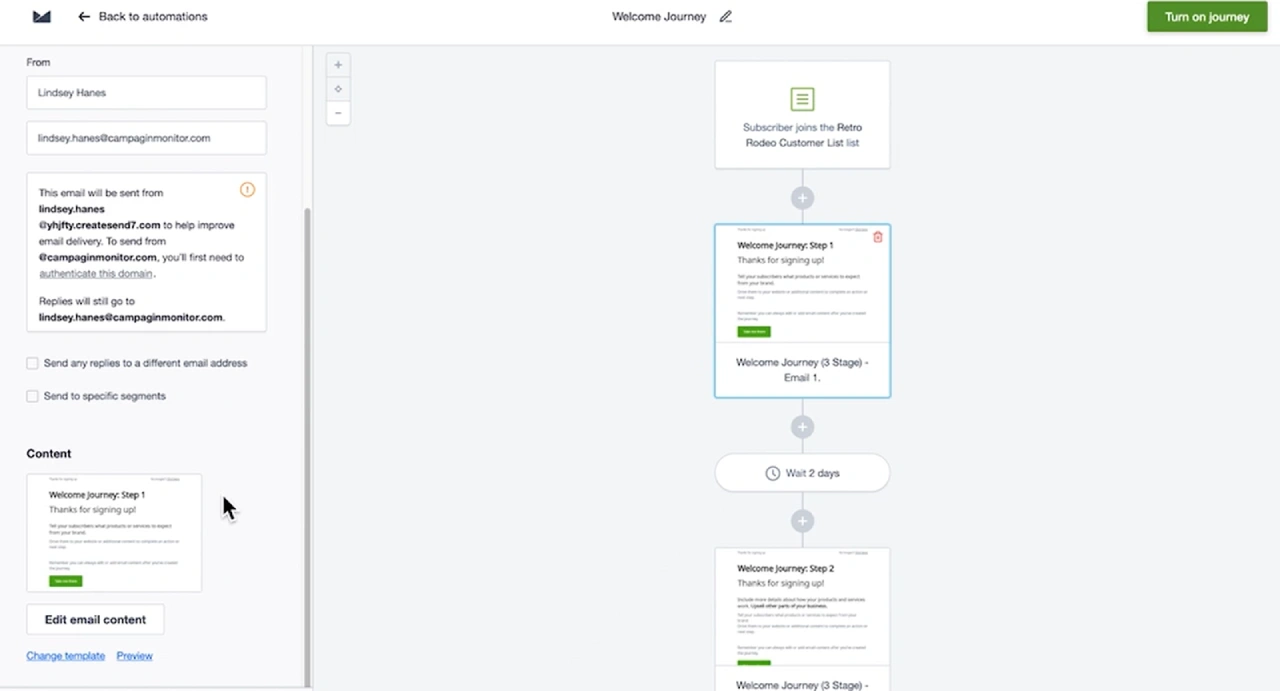
BTW, using our automated customer journey builder, you can create this entire sequence once and have it automatically deploy for each new patient.

2. Appointment Reminders and Confirmations
No-shows cost chiropractic practices thousands in lost revenue annually. Effective reminder emails can significantly reduce this problem.
Subject: Your appointment with Dr. [Name] is on [Day] at [Time]

Header: Your appointment is confirmed!

Section 1: Appointment details (date, time, doctor, location)
Section 2: Any preparation instructions (wear comfortable clothing, etc.)
Section 3: Cancellation/rescheduling policy with phone number
Section 4: Map or directions to your office

CTA Button: "Add to Calendar" or "Reschedule if Needed"| Timing | Subject Line Example | Key Content | |
|---|---|---|---|
| Initial Confirmation | Immediately after booking | “Your appointment with Dr. [Name] is confirmed!” | Appointment details, doctor bio, what to expect |
| Preparation Reminder | 3 days before appointment | “Getting ready for your visit on [Date]” | Preparation instructions, paperwork reminders, parking info |
| Final Reminder | 24 hours before appointment | “Reminder: Your appointment tomorrow at [Time]” | Appointment time, cancellation policy, what to bring |
| Same-Day Alert | Morning of appointment | “See you today at [Time], [First Name]!” | Office address, brief reminder of preparation steps |
| Missed Appointment | 4 hours after missed appointment | “We missed you today, [First Name]” | Concern message, easy rescheduling options |
BTW, our Unified Email Builder allows you to design and test transactional messages that are not just on-brand, but also mobile-ready!
3. Post-Visit Follow-ups
After a patient’s visit, follow-up emails help reinforce care instructions and gather valuable feedback.
Subject: How are you feeling after your adjustment, [First Name]?

Header: Thank you for visiting [Practice Name]

Section 1: Personalized message referencing their specific treatment
Section 2: Home care instructions and exercises (with images or video links)
Section 3: What to expect in the coming days
Section 4: Request for feedback with a simple 1-5 rating system
Section 5: Invitation to leave a Google or Facebook review (with direct links)

CTA Button: "Share Your Feedback" or "Leave a Review"
| Timing | Subject Line Example | |
|---|---|---|
| Same-Day Check-in | Evening of visit | “How are you feeling after today’s adjustment, [First Name]?” |
| Care Instructions | 1 day after visit | “Your personalized care plan from [Practice Name]” |
| Feedback Request | 3 days after visit | “How was your experience with us?” |
| Review Invitation | 7 days after the visit (if positive feedback) | “Would you recommend us to others?” |
| Follow-up Reminder | 3 days before the recommended next visit | “Time for your next adjustment?” |
4. Educational Wellness Newsletters
Regular educational content keeps your practice top-of-mind while providing genuine value to patients.
Subject: 3 Simple Stretches to Relieve Desk-Related Neck Pain

Header: Your Monthly Wellness Update from [Practice Name]

Section 1: Feature article on desk ergonomics and neck pain
Section 2: Three stretches with step-by-step instructions and images
Section 3: Patient success spotlight (with permission)
Section 4: Practice news or upcoming events
Section 5: Healthy recipe or wellness tip of the month

CTA Button: "Schedule Your Next Adjustment"
| Timing | Subject Line Example | |
|---|---|---|
| Quick Tip | Weekly | “60-Second Desk Stretch for Neck Relief” |
| Seasonal Prevention | Start of each season | “Prevent Winter Back Pain with These 5 Tips” |
| Wellness Guide | Monthly email newsletter | “The Complete Guide to Proper Lifting Technique” |
| Myth Buster | Bi-monthly | “Debunked: 3 Myths About Cracking Your Knuckles” |
| Lifestyle Challenge | Quarterly | “30-Day Better Posture Challenge” |
Frequency recommendations:
Most practices find that a monthly or bi-monthly newsletter strikes the right balance between staying connected and avoiding inbox fatigue.
Looking to create professional, mobile-optimized emails without the hassle? We’ve got you covered with two fantastic options: build stunning designs from scratch with our intuitive drag-and-drop builder, or jump right in with our extensive library of responsive templates for promotions, newsletters, and more. Either way, your emails will look polished and professional with minimal effort!
5. Reactivation Campaigns for Lapsed Patients
Every practice has patients who complete their treatment plan and don’t return, or who simply stop scheduling appointments. Reactivation campaigns can bring these patients back.
Subject: [First Name], we've missed seeing you at [Practice Name]

Header: It's been a while...

Section 1: Personalized message acknowledging time since last visit
Section 2: Inquiry about their current health status
Section 3: Brief update on new chiropractic services or techniques that might interest them
Section 4: Special offer for returning patients
Section 5: Simple way to schedule their next appointment

CTA Button: "Schedule Your Comeback Visit"
| Timing | Subject Line Example | |
|---|---|---|
| Initial Check-in | 90 days after last visit | “We’ve missed you at [Practice Name], [First Name]” |
| Educational Value | 7 days after initial check-in | “Still experiencing [their condition]? This might help…” |
| Practice Update | 14 days after educational email | “What’s new at [Practice Name]” |
| Special Offer | 21 days after practice update | “Special returning patient offer inside” |
| Final Outreach | 35 days after special offer | “One last check-in from Dr. [Name]” |
P.S. Our segmentation tools help you identify and target lapsed patients with personalized re-engagement messages. You can create segments based on the last appointment date and automatically trigger reactivation sequences when patients haven’t visited in a specified timeframe.


6. Special Offers and Promotions
Strategic promotions can drive new appointments and encourage additional services when created ethically and with patient health as the primary focus.
| Timing | Subject Line Example | |
|---|---|---|
| Offer Announcement | Day 1 of promotion | “Introducing our [Season] Wellness Special” |
| Educational Context | 3 days after announcement | “Why [Service] matters for your spinal health” |
| Testimonial Support | 7 days after educational email | “How [Service] helped [Patient First Name]” |
| Deadline Reminder | 3 days before offer ends | “[First Name], your special offer expires soon” |
| Last Chance | Final day of promotion | “Last day to take advantage of our [Season] Special” |
Our countdown timer block adds urgency to promotional emails by showing real-time countdowns whenever a subscriber opens your message. This visual trigger makes limited-time offers feel more urgent, encouraging prospective patients to take action before the offer expires.


7. Patient Testimonials and Success Stories
This sequence showcases real results while encouraging other patients to share their experiences as well.
Subject: How Dr. [Name] helped Sarah get back to running after years of pain

Header: Patient Success Story: Sarah's Journey

Section 1: Introduction to the patient's story
Section 2: The challenge they faced (with patient photo if permitted)
Section 3: The treatment approach
Section 4: The results and impact on their life
Section 5: Quote from the patient
Section 6: Similar conditions you treat

CTA Button: "Share Your Story" or "Schedule a Consultation"
| Timing | Subject Line Example | |
|---|---|---|
| Featured Story | Monthly | “How Dr. [Name] helped Sarah return to running” |
| Condition Spotlight | Bi-monthly | “Real relief from [Condition]: 3 Patient Stories” |
| Video Testimonial | Quarterly | “Watch: Mark’s journey from pain to performance” |
| Invitation to Share | After positive feedback or milestone | “Would you share your chiropractic journey?” |
| Testimonial Showcase | Bi-annually | “6 Life-Changing Transformations from [Practice Name]” |
8. Referral Request Emails
Patient referrals are among the most valuable sources of new patients. This sequence tactfully encourages satisfied patients to refer friends and family while providing them with the tools to easily share their positive experiences.
Subject: [First Name], help your friends and family feel better too

Header: Your referrals mean the world to us

Section 1: Thank you message for being a valued patient
Section 2: Explanation of how referrals help the practice
Section 3: Simple referral process (share link, mention name, etc.)
Section 4: Referral incentive details
Section 5: Reassurance about patient care quality

CTA Button: "Refer a Friend Now"
| Timing | Subject Line Example | |
|---|---|---|
| Value Reminder | After positive feedback or milestone | “Thank you for trusting us with your care” |
| Referral Invitation | 7 days after value reminder | “Help your friends and family feel better too” |
| Referral Tools | 14 days after invitation | “Easy ways to share [Practice Name] with others” |
| Gentle Reminder | 35 days after success story | “Your referrals make a difference” |
P.S. Our A/B testing engine allows you to optimize your referral emails by trying different approaches, incentives, and messaging to discover which version generates the best response from your patients.


9. Birthday and Anniversary Messages
Personalized milestone communications help strengthen patient relationships and demonstrate that you see them as individuals, not just appointments.
Subject: Happy Birthday, [First Name]! A special gift from [Practice Name]

Header: Celebrating YOU on your special day!

Section 1: Personalized birthday message
Section 2: Brief reflection on their health journey
Section 3: Birthday offer details
Section 4: Wellness wish for the coming year

CTA Button: "Redeem Your Birthday Gift"
Personalizing milestone communications:
- Reference how long they’ve been a patient
- Mention specific health improvements they’ve achieved
- Include a personal note from their doctor
- Make the message about them, not your practice
| Subject Line Example | Key Content | |
|---|---|---|
| Birthday Greeting | “Happy Birthday from all of us at [Practice Name]!” | Warm wishes, small gift or offer, wellness message |
| Patient Anniversary | “Celebrating 1 year of your wellness journey!” | Reflection on health progress, appreciation message |
| Treatment Milestone | “Congratulations on completing your treatment plan!” | Celebration of progress, maintenance recommendations |
| Health Goal Achievement | “You did it! Celebrating your health victory” | Recognition of specific health achievement, next steps |
| Practice Anniversary | “Celebrating [X] years of serving [City]!” | Practice history, gratitude for patients, special event or offer |
Read Next:
Building Your Chiropractic Email List
A successful email marketing strategy starts with a quality subscriber list. Here’s how to build yours ethically and effectively.
Ethical List-Building Strategies for Healthcare Providers
As healthcare providers, chiropractors must be especially careful about how they collect and use patient information. Follow these ethical guidelines:
- Always get explicit permission – Never add patients to marketing lists without their consent
- Explain the benefits – Let patients know what type of content they’ll receive and how often
- Provide an easy opt-out – Make unsubscribing simple and honor requests immediately
- Maintain HIPAA compliance – Ensure your email collection and storage methods protect patient privacy
Website Sign-up Optimization
Your website is often the first point of contact for potential patients. Optimize it for email collection:
- Place sign-up forms strategically – Include forms on your homepage, blog posts, and service pages
- Offer a valuable lead magnet – Create a downloadable resource like “5 Stretches to Relieve Back Pain” or “The Ultimate Guide to Better Posture” in exchange for email addresses
- Use exit-intent popups – Capture emails from visitors who are about to leave your site
- Implement a chatbot – Use conversational AI to engage visitors and collect emails
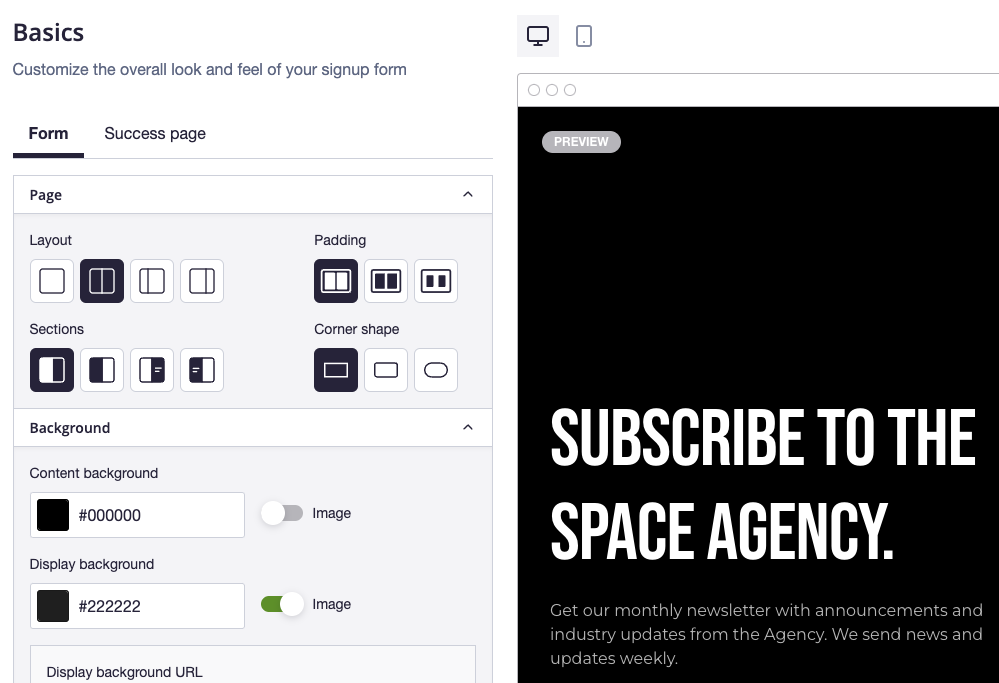
Want to collect patient emails effortlessly? Our custom form builder lets you create sleek signup forms that perfectly match your practice branding. Just drag and drop the elements you need—no coding required!

In-office Collection Methods
Your physical office provides numerous opportunities to grow your email list:
- Digital intake forms – Include an email marketing opt-in on new patient paperwork
- Tablet sign-ups – Keep a tablet at the front desk for quick sign-ups
- Feedback cards – Include an email field on patient feedback cards
Read Next:
Email Marketing Automation for Chiropractors
Automation is where email marketing truly shines for busy chiropractic practices. By setting up automated email campaigns, you can deliver the right message at the right time without manual intervention.
Key Workflows to Automate
These essential automated email marketing workflows will save your practice time while improving patient communication:
1. New Patient Onboarding
Trigger: First appointment booking Purpose: Welcome new patients and prepare them for their first visit Sequence:
- Immediate: Welcome email with practice information
- 1 day before appointment: Preparation instructions and office details
- 1 day after appointment: Thank you and follow-up care instructions
- 7 days after appointment: Educational content related to their condition
2. Appointment Reminder Sequence
Trigger: Scheduled appointment Purpose: Reduce no-shows and late cancellations Sequence:
- 3 days before: Initial reminder with appointment details
- 1 day before: Final reminder with preparation instructions
- After appointment: Thank you and feedback request
3. Patient Reactivation
Trigger: 90+ days since last appointment Purpose: Re-engage inactive patients Sequence:
- Day 1: “We miss you” email with health check-in
- Day 7: Educational content related to their last treatment
- Day 14: Special offer for returning patients
- Day 30: Final check-in with easy scheduling option
4. Birthday Sequence
Trigger: Patient’s birthday Purpose: Strengthen relationship and encourage visits Sequence:
- Birthday: Personalized birthday message with special offer
- 7 days later: Reminder to use birthday offer if not redeemed
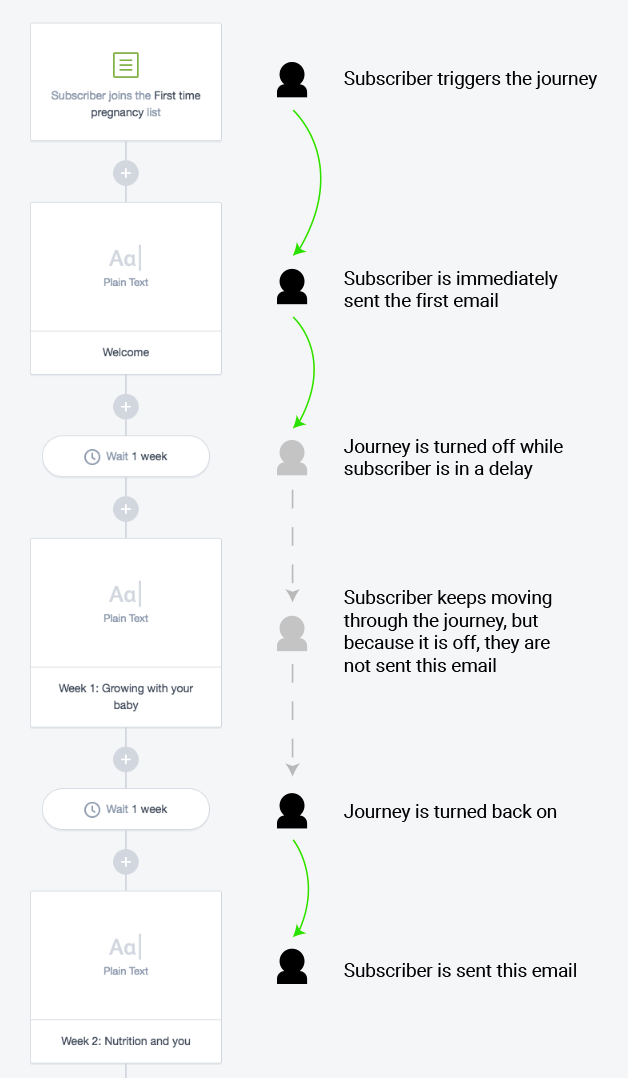
Campaign Monitor’s journey builder excels at creating these behavior-triggered workflows. The visual interface makes it easy to map out complex sequences with conditional logic based on patient actions.
Patient Journey Mapping
To create effective automation workflows, map out your ideal patient journey:
- Awareness – Potential patient discovers your practice
- Consideration – Researches your services and credentials
- Decision – Books first appointment
- Experience – Receives treatment and evaluates results
- Retention – Continues treatment plan or maintenance care
- Advocacy – Refers friends and family, leaves positive reviews
For each stage, identify:
- Key patient questions and concerns
- Information they need
- Actions you want them to take
- Appropriate email content and timing
P.S. With our automated journey builder, you can create behavior-triggered workflows that deliver personalized emails based on subscribers’ actions.
A subscriber hasn’t opened emails in 90 days? A re-engagement email is sent. Did a patient open your welcome email but not click through? Our system automatically sends the perfect follow-up for each sequence—no manual work required.

Read Next: How to Grow Your Business with Email Marketing Automation
Measuring Success: Key Metrics for Chiropractic Email Marketing Campaigns
To optimize your email marketing efforts, you need to track the right metrics and understand what they mean for your practice.
Important KPIs to Track
Focus on these key performance indicators:
| Metric | What It Measures | Improvement Strategies |
|---|---|---|
| Open Rate | Percentage of recipients who open your email | – Test subject lines with urgency-focused language (e.g., “Last chance to book!”). – Use personalization with the patient’s name for better engagement. |
| Click-Through Rate (CTR) | Percentage of recipients who click a link in your email | – Use clear, compelling calls-to-action (CTAs) like “Book Now” or “Schedule Your Free Consultation”. – Add a sense of urgency by highlighting limited availability in CTAs. |
| Conversion Rate | Percentage of recipients who complete a desired action | Offer time-sensitive discounts or special offers to existing patients to drive immediate action – Use retargeting campaigns to bring back patients who clicked but didn’t convert. |
| Bounce Rate | Percentage of emails that couldn’t be delivered | – Regularly clean your email list by removing inactive subscribers. – Use double opt-in forms to ensure valid and engaged email addresses. |
| Unsubscribe Rate | Percentage of recipients who opt out | – Offer a clear value proposition upfront so subscribers know what to expect. – Ask for feedback from unsubscribers to understand their reasons. |
| List Growth Rate | Net growth of your subscriber list over time | – Leverage in-office sign-ups with digital intake forms. – Offer valuable lead magnets (e.g., “Free Spinal Adjustment Guide”) in exchange for email addresses. |
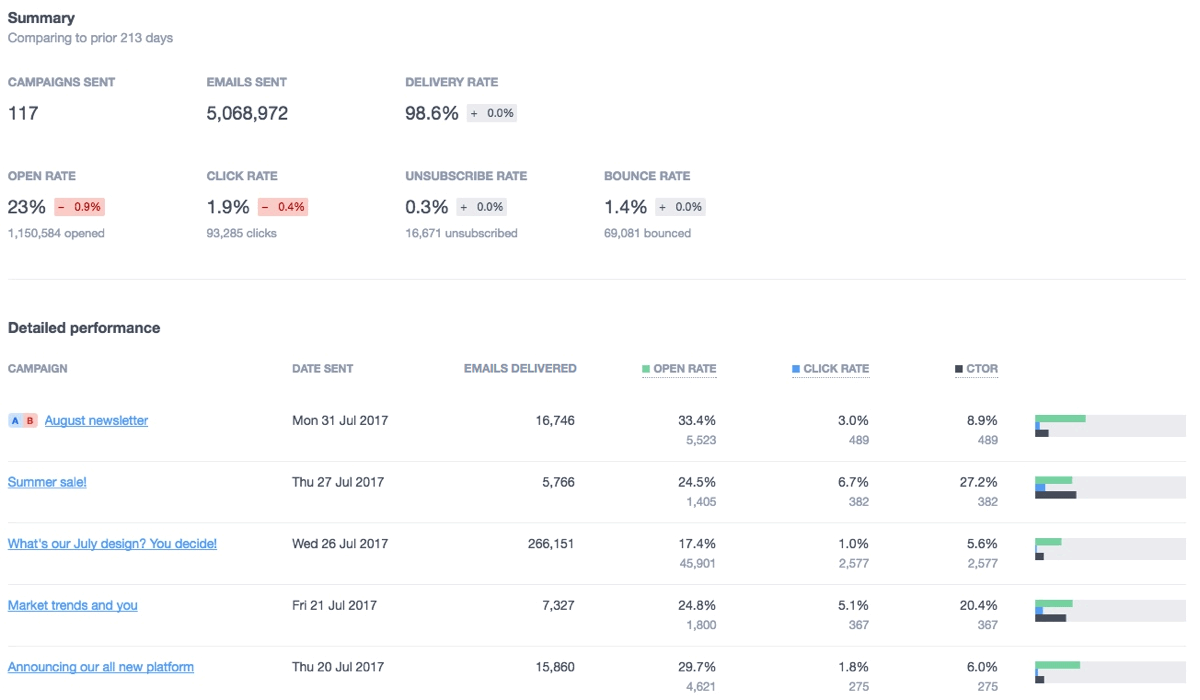
Our live performance dashboards make tracking these metrics simple, even for busy practitioners. The intuitive interface provides at-a-glance performance data and allows you to drill down into specific campaigns or time periods.

Read Next:
Email Marketing Compliance for Healthcare Providers
Note: Campaign Monitor is not a HIPAA-compliant platform and must not be used to store or transmit protected health information (PHI). This content is provided for general marketing education only and does not constitute legal or regulatory advice.
Healthcare providers face unique compliance challenges when it comes to email marketing. Understanding and following these regulations is essential.
Things to Consider
The Health Insurance Portability and Accountability Act (HIPAA) has significant implications for your email marketing:
- Never include Protected Health Information (PHI) in marketing emails
- Implement proper access controls for staff managing email campaigns
- Maintain documentation of patient consent for email communications
- Use secure methods for storing email addresses and patient information
Managing Opt-Ins and Documentation: Important Considerations
Proper consent management is crucial:
- Use double opt-in when possible (subscriber confirms via email after initial signup)
- Keep records of when and how patients opted in
- Include clear language about what they’re signing up for
- Make unsubscribing easy and honor requests promptly
- Regularly clean your list of unengaged subscribers
Sample opt-in language:
Yes, I consent to receive email communications from [Practice Name] including:
  - Health and wellness information
  - Practice updates and news
  - Special discounts and promotions
  - Appointment reminders

I understand I can unsubscribe at any time by clicking the link in any email or contacting the practice directly.
Best Practices for Maintaining Patient Privacy
Follow these guidelines to protect patient privacy in your email marketing:
- Use blind carbon copy (BCC) for group emails to hide recipient addresses from each other
- Avoid specific treatment details in marketing emails
- Be cautious with testimonials – get written permission and avoid specific health details
- Create clear boundaries between transactional communications (appointment reminders) and marketing messages
- Train all staff on email privacy requirements
P.S. Campaign Monitor automatically appends opt-out language to comply with regulations.
The Chiropractic Email Engagement Framework
To maximize the effectiveness of your email marketing, implement the ALIGN Method—a proprietary framework developed specifically for chiropractic email marketing.
The ALIGN Method Explained
| Component | Purpose | Metrics to Track |
|---|---|---|
| Awareness | Educate patients about their condition and treatment options | Open rates, Resource downloads |
| Lifestyle | Provide actionable wellness tips that complement chiropractic care | Click-through rates, Video views |
| Interaction | Create two-way communication opportunities | Response rates, Survey completions |
| Growth | Encourage referrals and practice expansion | Referral conversions, New service bookings |
| Nurture | Maintain long-term patient relationships | Retention rates, Reactivation success |
Awareness: Educating Patients
Email examples:
- “Understanding the Science Behind Chiropractic Adjustments”
- “What’s Really Causing Your Headaches? 5 Surprising Triggers”
- “Myth vs. Fact: The Truth About Back Pain”
Timing recommendations:
- Send early in the patient relationship
- Include in welcome sequences
- Deliver after diagnosis of a new condition
Success metrics:
- Resource downloads
- Website visits to condition-specific pages
Lifestyle: Providing Actionable Wellness Tips
Email examples:
- “3 Desk Stretches You Can Do in Under 2 Minutes”
- “Your Perfect Morning Routine for a Pain-Free Day”
- “Sleep Positions That Help (Not Hurt) Your Spine”
Timing recommendations:
- Send consistently (weekly or bi-weekly)
- Time seasonally when appropriate
- Deliver after related treatments
Success metrics:
- Click-through rates to detailed instructions
- Video view completions
- Social shares
Interaction: Creating Two-Way Communication
Email examples:
- “Quick Question: How Has Your Back Pain Changed?”
- “Help Us Serve You Better: 2-Minute Survey”
- “Ask Dr. Smith: Submit Your Spine Health Questions”
Timing recommendations:
- Send after several value-providing emails
- Space out requests (no more than monthly)
- Time around practice changes or new services
Success metrics:
- Survey completion rates
- Question submissions
- Direct email replies
Growth: Encouraging Referrals and Practice Expansion
Email examples:
- “Your Referrals Mean the World to Us”
- “Introducing: Our New Spinal Decompression Therapy”
- “Special Offer for Your Friends and Family”
Timing recommendations:
- Send after positive feedback or successful outcomes
- Time new service announcements with launch dates
- Space referral requests appropriately (quarterly)
Success metrics:
- Referral conversions
- New service bookings
- Forward and share rates
Nurture: Maintaining Long Term Relationships
Email examples:
- “Happy Birthday from All of Us at [Practice Name]!”
- “It’s Been a While – How’s Your Neck Feeling?”
- “Your Spinal Health Check-Up is Due”
Timing recommendations:
- Send on meaningful dates (birthdays, anniversaries)
- Time reactivation emails 60-90 days after last visit
- Schedule check-ins between maintenance visits
Success metrics:
- Patient Retention rates
- Reactivation appointment bookings
- Long-term patient value
This framework provides a structured approach not found in competing content, giving chiropractors a memorable system to ensure their email program addresses all key patient touchpoints.
See Your Revenue Soar With Campaign Monitor!
Email marketing for chiropractors isn’t just about sending messages—it’s about creating meaningful connections that support your patients’ health journey while growing your practice.
Key Takeaways:
- Start with a marketing strategy, not tactics – Map your patient journey before creating emails
- Personalization drives engagement – Use patient data to create relevant, personalized content and communications
- Automation is your practice’s best friend – Set up key workflows to save time while improving patient communication
- Measurement matters – Track your results and continuously optimize your approach
- Compliance isn’t optional – Always prioritize patient privacy and regulatory requirements
Campaign Monitor makes it easy to implement everything we’ve covered in this guide. With intuitive tools for creating on-brand, mobile responsive emails, powerful automation capabilities, and robust analytics, you can build an effective chiropractic email marketing plan that attracts potential new patients, improves retention, and grows your practice.
Get started today and watch your patient relationships—and practice revenue—reach new heights.