
Email marketing remains one of the most powerful tools in a hotel’s digital arsenal. The difference between a campaign that drives direct bookings and one that gets lost in the inbox often comes down to personalization, timing, and execution.
In this guide, we’ll explore how to:
- Drive direct reservations and reduce OTA dependency with 9 email sequences
- Build lasting relationships with guests before, during, and after their stay
- Create “I can’t miss this” moments with perfectly timed booking triggers
Ready? Let’s go!
TL;DR
- Pre-Stay: Send destination guides 14 days pre-arrival and room upgrade offers 3 days prior
- During-Stay: Welcome guests digitally on arrival day and check satisfaction mid-stay
- Post-Stay: Request reviews 24 hours post-checkout and offer return discounts 7 days later
- Promotional: Create urgency with countdown timers for special offers and seasonal packages
- Abandoned Booking: Send reminder 1 hour after cart abandonment with targeted incentives
- Welcome Series: Welcome new subscribers with a 4-series email sequence.
- Anniversary: Trigger personalized birthday offers with celebration packages for repeat visits
- Re-Engagement: Win back inactive subscribers after 3-6 months with specialized offers
- Loyalty Program: Update members monthly on points balance and available rewards


9 Types of Hotel Email Campaigns That Are a No-Brainer
A successful email marketing strategy includes several types of campaigns, each serving different purposes throughout the guest journey. Let’s explore the essential email types every hotel should implement.
#1) Pre-Stay Emails


Source: ReallyGoodEmails (https://files.reallygoodemails.com/emails/your-reservation-confirmation.png)
The pre-arrival emails build anticipation, provide valuable information, and create upsell opportunities.
| Content Focus | Timing | Key Elements |
|---|---|---|
| Booking Confirmation Email | Immediate after booking | Reservation details, check-in info, cancellation policy |
| Destination Guide | 14 days before arrival | Local attractions, weather forecast, transportation options |
| Pre-Arrival Information | 7 days before arrival | Check-in process, property map |
| Upsell Opportunities | 3 days before arrival | Room upgrades, dining reservations, spa treatments |
#2) During-Stay Email Sequence


Source; Pinterest (https://www.pinterest.com/pin/114349278014572437/)
During-stay emails enhance the guest experience while they’re on property, providing timely information, contact details, and showcasing additional offerings.
| Content Focus | Timing | Key Elements |
|---|---|---|
| Welcome Message | Day of arrival (after typical check-in time) | Wi-Fi password, property amenities, contact information |
| Experience Enhancement | Morning of day 2 | Daily activities, dining options, local recommendations |
| Mid-Stay Check-In | Middle of stay for 3+ night bookings | Satisfaction check, additional service offers |
| Departure Preparation | Evening before check-out | Check-out procedures, transportation options, future booking incentive |
#3) Post-Stay Email Sequence


Source: ReallyGoodEmails (https://files.reallygoodemails.com/emails/thanks-for-staying-2.png)
Post-stay emails maintain the relationship after the guest has departed, gathering valuable feedback and encouraging future guests and bookings.
| Content Focus | Timing | Key Elements |
|---|---|---|
| Thank You & Feedback Request | 24 hours after check-out | Appreciation message, short survey link, review request |
| Review Reminder (if no review left) | 3 days after check-out | Gentle reminder, direct links to review platforms |
| Return Visit Incentive | 7 days after check-out | Special offer for return booking, loyalty program information |
| Destination Content | 30 days after check-out | Seasonal updates, new offerings, and events at the property |
#4) Promotional and Seasonal Campaign Sequence


These campaigns drive bookings during specific periods and highlight special offerings.
| Content Focus | Timing | Key Elements |
|---|---|---|
| Announcement/Teaser | 2 weeks before the promotion starts | Create anticipation, hint at upcoming offer |
| Offer Launch | First day of promotion | Full offer details, booking link, clear expiration date |
| Social Proof | 7 days into the promotion | Testimonials of satisfied hotel guests |
| Last Chance Reminder | 48 hours before end | Urgency message, countdown timer, final call to action |
Campaign Monitor’s dynamic content blocks allow you to create one email template but display different content based on guest segments. For example, you can show family-friendly activities to those with children and romantic experiences to couples, all within the same campaign.
#5) Abandoned Booking Recovery Sequence


Source: ReallyGoodEmails (https://files.reallygoodemails.com/emails/san-diego.png)
The conversion rate for cart abandonment emails is more than 10%
| Content Focus | Timing | Key Elements |
|---|---|---|
| Gentle Reminder | 1 hour after abandonment | Reservation details, helpful information, support contact, targeted messages |
| Address Concerns | 24 hours after abandonment | FAQ, testimonials |
| Special Incentive | 3 days after abandonment | “10% off on your booking.” Add an urgency element as well. |
#6) Welcome Series for New Subscribers


Source: ReallyGoodEmails (https://files.reallygoodemails.com/emails/thank-you-kindly-for-signing-up.png)
Create a series of automated emails to introduce new email subscribers to your property.
| Content Focus | Timing | Key Elements |
|---|---|---|
| Welcome & Introduction | Immediate | Thank you message, what to expect, quick property overview |
| Brand Story & Values | Day 2 | Hotel history, mission, sustainability practices, unique selling points |
| Property Showcase | Day 4 | Virtual tour, room types, amenities, dining options |
| Special Offer | Day 7 | Exclusive discount or package for new subscribers |
#7) Anniversary and Special Occasion Campaigns


Source: ReallyGoodEmails (https://files.reallygoodemails.com/emails/smiles-davis-take-a-peek-at-your-2024-highlights.png)
Create memorable moments by acknowledging special occasions.
| Content Focus | Timing | Key Elements |
|---|---|---|
| Birthday Celebration | On or before birthday | Special birthday offer, celebration package, inviting guests to join loyalty programs |
| Personal Milestone | When appropriate | Congratulatory message, special experience offer |
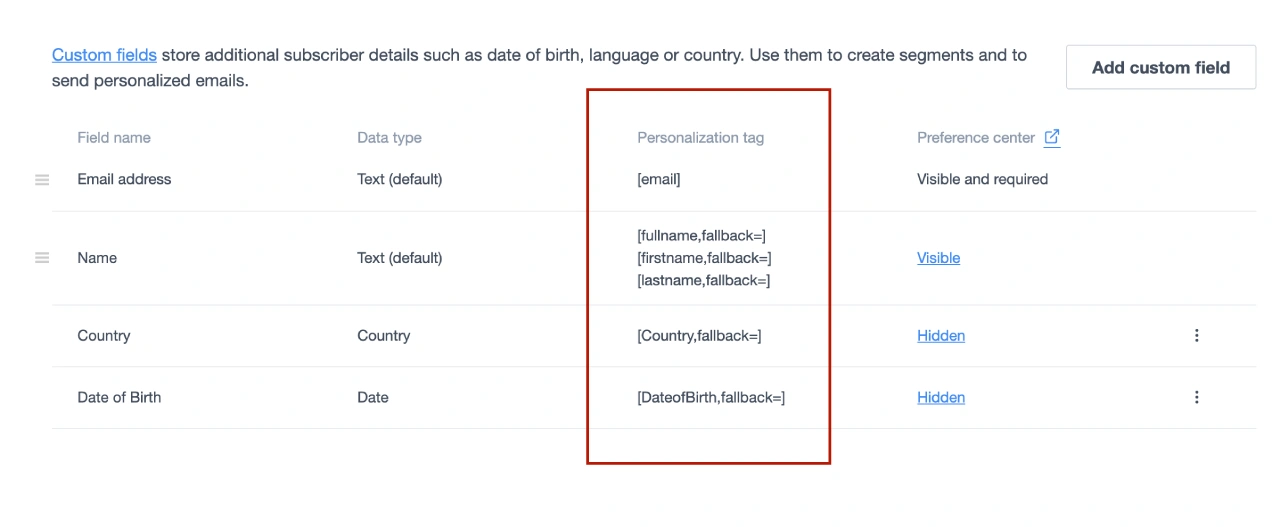
Use Campaign Monitor’s personalization engine to store and use important dates like previous stays, birthdays, and anniversaries to trigger these timely, relevant communications. The platform’s date-based automation ensures these emails are sent at exactly the right moment to maximize impact.

#8) Re-Engagement Campaigns for Inactive Subscribers
Win back subscribers who haven’t engaged with your emails.
| Content Focus | Timing | Key Elements |
|---|---|---|
| “We Miss You” | After 3-6 months of inactivity | Acknowledgment of absence, hotel updates |
| Preference Update | 7 days after the first email | Ask for feedback + Share an incentive |
| Final Attempt | 7 days after the second email | Reminder of the offer (expliration) and clear unsubscribe opti |
Campaign Monitor’s segmentation tools help create a segment for subscribers who haven’t opened an email in the last 3 months and send them a targeted campaign with an exclusive offer, such as a discount on their next stay or a special package deal. This personalized approach can increase engagement and bring those subscribers back into the booking funnel.
#9) Loyalty Program Campaigns


Source: ReallyGoodEmails (https://files.reallygoodemails.com/emails/now-introducing-achievements.png)
Nurture your loyalty program members with exclusive communications.
| Content Focus | Timing | Key Elements |
|---|---|---|
| Welcome to Program | Upon enrollment | Program benefits, how to earn/redeem points, member portal access |
| Status Updates | Monthly or quarterly | Points balance, available rewards, tier status progress |
| Exclusive Member Offers | As available | Member-only rates, double points promotions, partner benefits |
| Tier Upgrade Celebration | Upon tier change | Congratulations, new benefits explanation, celebration offer |
Campaign Monitor’s Loyalty Journey Builder can help send personalized messages at every stage of the customer’s journey. From informing customers when they hit a milestone to reminding them to use their rewards, the email marketing software automates the complete process.


Read Next:
- How Campaign Monitor Helped Blue Tent Achieve $50K increase in revenue
- 9 Emails Every Marketer Should Be Sending
- 11 Incredible Welcome Email Examples (and Why They Work)
Building an Effective Hotel Email List
Building a quality list of engaged subscribers is essential for driving bookings and revenue.
Ethical List-Building Strategies
Focus on quality over quantity with these ethical list-building approaches:
Website Sign-Up Forms
Optimize your website to capture email addresses:
- Place sign-up forms strategically on high-traffic pages of your hotel website
- Create a compelling value proposition (exclusive offers, insider tips)
- Keep forms simple with minimal required fields
- Use exit-intent popups to capture emails before visitors leave
Pro Tip: Use Campaign Monitor’s custom form builder to create branded sign-up forms for their websites, making it easy to capture new subscribers.


In-Person Collection
Leverage guest interactions to grow your list:
- Collect emails during check-in with permission
- Place QR codes in rooms linking to your sign-up form
- Offer a small incentive for signing up (welcome drink, late checkout)
Incentives for Email Sign-Ups
Give potential subscribers a compelling reason to share their email address:
- Exclusive discounts for subscribers only
- Early access to special offers and packages
- Free amenities during their stay (welcome drink, breakfast)
- Valuable content like local guides or insider tips
Managing and Cleaning Your Email List
Maintain a healthy, engaged list for better deliverability and performance:
- Remove inactive subscribers who haven’t engaged in 6-12 months
- Implement a re-engagement campaign before removing subscribers
- Use double opt-in to ensure quality subscriptions
- Regularly update contact information and customer data when guests return
Compliance with Privacy Regulations
Ensure your email marketing practices comply with relevant regulations:
- Obtain explicit consent before adding anyone to your list
- Include clear unsubscribe options in every email
- Maintain proper records of consent for GDPR compliance
- Honor unsubscribe requests promptly (within 10 business days)
- Include your physical address in email footers (CAN-SPAM requirement)
Campaign Monitor’s preference center lets subscribers control what types of communications they receive, improving engagement and reducing unsubscribes.
Read Next:
- Campaign Monitor Helped the Drake Hotel Achieve 61% Increase in Subscribers
- Why Verifying Emails is a Win-win for Email Marketing
- 6 Email List Management Best Practices
Content Creation and Email Design
Segmentation Strategies for Hotel Email Marketing
Segmentation is the process of dividing your email list into smaller, more targeted groups based on specific criteria, such as business travelers. This allows you to send more relevant content to each subscriber, increasing engagement and conversions.
Different types of travelers have different needs and preferences. Segment your list by:
- Guest type: Business vs. leisure, groups vs. individuals, families vs. couples
- Booking history: First-time vs. repeat guests, booking frequency, average spend
- Stay preferences: Room types, amenities used, dining habits, activities booked
- Geographic location: Local vs. international, climate-based targeting, language preferences
- Email engagement: Active vs. inactive subscribers, click behavior, content preferences
Personalization Techniques You Can’t (and Shouldn’t) Ignore
Personalization goes beyond using a guest’s name in your emails. Here are techniques that drive results:
Data-Driven Personalization
- Use guest history data to reference previous stays and preferences
- Incorporate location data for weather comparisons and transportation information
- Leverage behavioral data to recommend relevant amenities and experiences
- Recognize special occasions like birthdays, anniversaries, and milestones
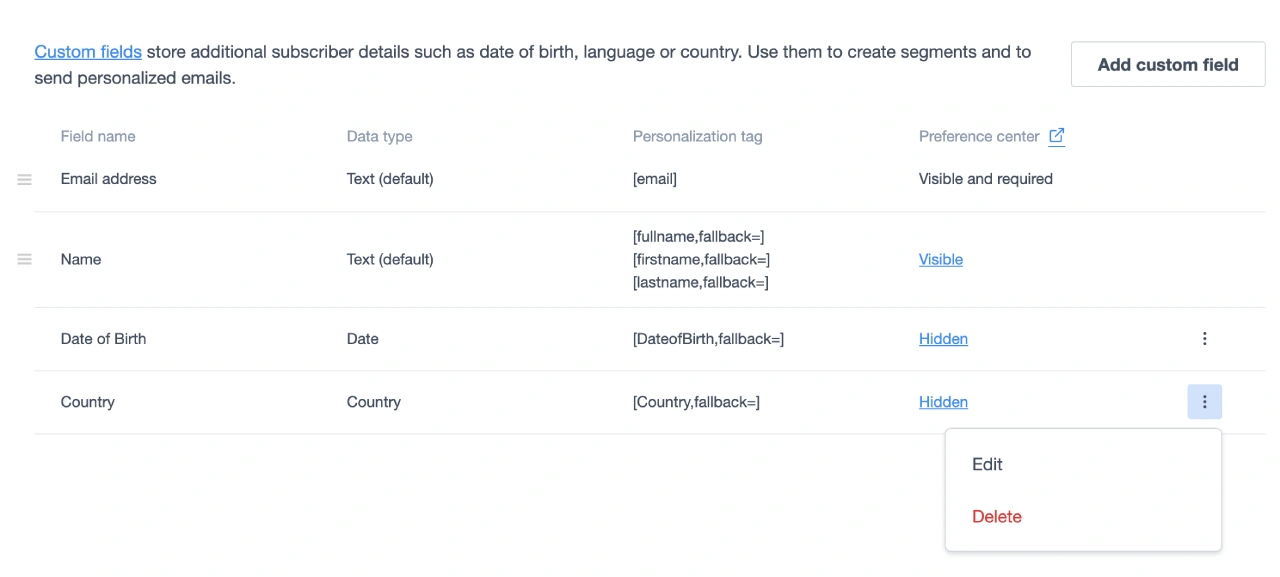
Campaign Monitor’s personalization engine allows you to store and use up to 50 custom fields for each subscriber based on guest history, preferences, and behavior.

Behavior-Triggered Communications
Set up automated emails triggered by specific guest actions:
- Booking abandonment: Send an automated email with a special offer to complete the reservation
- Website browsing: Follow up with content related to pages they visited
- Email engagement: Send similar content to what previously resonated with them
Campaign Monitor’s automation features can set up these triggered emails based on subscribers’ actions, creating timely, relevant communications that drive bookings. For example, you can automatically send a special offer to someone who viewed your premium suites but didn’t complete a booking, with personalized content highlighting the specific room they were interested in.


Read Next:
- Top 5 Email Marketing Segmentation Strategies
- The Power of Email Personalization to Reach Humans (Not Just Inboxes)
Hotel Email Marketing Strategies to Implement
The visual design of your emails significantly impacts engagement and conversion rates. Follow these best practices to create compelling hotel email templates.
Mobile-Responsive Design Essentials
- Use a single-column layout for easy mobile viewing
- Ensure large, tap-friendly buttons (minimum 44×44 pixels)
- Keep subject lines under 40 characters to prevent truncation
- Use web-safe fonts at a minimum size of 14px
- Test across multiple devices and email clients
Campaign Monitor’s drag-and-drop email builder makes it easy for hotel marketers to create professional, branded emails with just a few clicks!
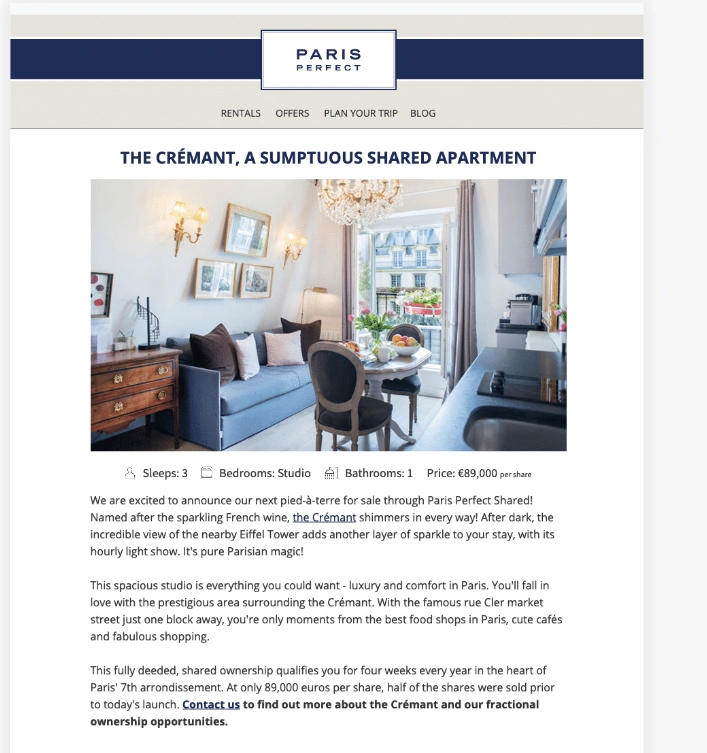
Drag-and-Drop Builder in Action: Looking for some inspiration? Bluetent uses in-house coders to create custom templates, and with Campaign Monitor’s drag-and-drop builder, their clients can easily personalize these templates to suit their brand. Here’s one of the templates created using this approach.

Visual Best Practices
Create visually appealing emails that showcase your property:
- Use high-quality images of your property, rooms, and amenities
- Maintain consistent branding with your website and other materials
- Balance text and images (recommended 60% text, 40% images)
- Compress images for faster loading times
- Include alt text for images in case they don’t load
The Power of Strategic Content in Hotel Emails
Beyond design elements, the actual content of your hotel emails significantly impacts conversion rates. Strategic content creates emotional connections and drives booking decisions:
- Focus on benefits, not just features: Instead of “Our rooms have ocean views,” try “Wake up to breathtaking sunrises over the ocean from your private balcony”
- Tell stories that transport guests: Share authentic experiences that help subscribers visualize themselves at your property
- Use social proof strategically: Incorporate guest testimonials and reviews that address common decision factors
- Create content hierarchies: Present your most compelling offer or information first, followed by supporting details
- Balance promotional and value-added content: Mix booking offers with helpful travel tips, local insights, and destination guides
Facing writer’s block? Campaign Monitor’s AI Copy Assistant brainstorms fresh ideas, transforms lengthy property descriptions into catchy captions, and crafts CTAs that drive bookings—letting you focus on the strategies that fill rooms.
Effective CTAs for Hotel Emails
Your call-to-action (CTA) is one of the most important elements of your marketing email:
- Use action-oriented language: “Book Your Stay” instead of “Click Here”
- Create a sense of urgency: “Limited Rooms Available” or “Offer Ends Friday”
- Make CTAs visually distinct: Use contrasting colors that stand out
- Position primary CTAs above the fold: Don’t make users scroll to find them
- Limit the number of CTAs: Focus on one primary action per email
Example CTA buttons that drive bookings:
- “Reserve Your Room”
- “Check Availability”
- “Claim Your 20% Discount”
- “Upgrade Your Stay”
- “Book Direct & Save”
A/B Testing Strategies for Hotel Emails
Continuously improve your email marketing efforts through testing:
- Test one element at a time: subject lines, images, CTA placement, etc.
- Use a significant sample size: At least 1,000 subscribers per variation
- Run tests for at least 24 hours: Account for different time zones
- Document your findings: Build a knowledge base of what works for your audience
Elements worth testing:
- Subject line length and style
- Personalization techniques
- Image selection (room photos vs. amenity photos)
- CTA button color and text
- Email send time and day
Campaign Monitor’s A/B testing feature allows you to test subject lines, content blocks, or CTAs to optimize every aspect of your emails. For example, you can A/B test offer types, such as room discounts versus complimentary services, to identify which offer drives more conversions, allowing you to refine your email strategy and maximize bookings.


Read Next:
- How to Be an Email Subject Line Superhero
- Anatomy of a Winning Email Design
- Email Design: The Best Practices Guide (+ Bonus Checklist)
Measuring Success: Key Metrics for Hotel Email Marketing
Tracking the right metrics helps you understand campaign performance and optimize future emails for better results.
Open Rates
Monitor how many subscribers open your emails:
- Industry benchmark: 20.2% for the travel, hospitality, and leisure industry.
- Factors that influence open rates: Subject line, sender name, send time, list quality
- Improvement strategies: A/B test subject lines, optimize preview text, clean your list every 6 months.
Click-Through Rates and Conversion Tracking
Track engagement and booking actions:
- Industry benchmark: 1.4% click-through rate for emails
- Conversion tracking: Set up UTM parameters to track bookings from email
- Click maps: Analyze which links and buttons get the most engagement
Booking Attribution from Email Campaigns
Connect email engagement to actual bookings:
- Set up proper tracking codes for all email links
- Configure conversion tracking in your booking engine
- Calculate revenue per email to understand campaign value
- Track booking window (time between email and reservation)
Campaign Monitor’s analytics dashboard provides real-time performance data that helps understand which email marketing campaigns drive the most bookings and revenue.


Read Next:
- 17 Email Marketing Metrics Every Marketer Needs to Know
- What are good open rates, CTRs, & CTORs for email campaigns?
What’s Next for Your Hotel Email Marketing?
The strategies we’ve covered in this guide represent the current best practices for hotel email marketing. By implementing these approaches, you’ll be well-positioned to drive more direct bookings, build stronger guest relationships, and increase revenue.
Key Takeaways for Hotel Email Marketing Success
- Segmentation is essential for delivering relevant content that drives action
- Automation creates personalized experiences throughout the customer journey
- Mobile optimization is non-negotiable with most emails now opened on smartphones
- Storytelling and exclusivity differentiate top-performing hotel email campaigns
- Testing and measurement enable continuous improvement and higher ROI
Campaign Monitor makes it easy to implement these strategies with intuitive tools for segmentation, automation, personalization, and analytics. The platform is designed to help hotels of all sizes create professional, effective email campaigns that drive bookings and build guest loyalty.