Imagine a direct line to your customers with 4,200% ROI, 43% open rates, and minimal costs—that’s email marketing for restaurants in 2025. While social media algorithms limit organic reach and ad costs rise, email marketing remains the most reliable way to fill tables and boost revenue.
In this complete guide, we share
- Smart strategies to build your email list using QR codes, WiFi sign-ups, and high-converting website forms
- Nine essential campaign types that drive reservations, from birthday offers to abandoned order recovery
- Targeted segmentation techniques that deliver the right offers to the right diners at exactly the right time
TL;DR
- Welcome Emails: Send incentives immediately, menu highlights on day 3, and testimonials on day 7
- Promotional Emails: Create urgency with offers like “Tuesday Wine Night: 50% off all bottles”
- Loyalty Programs: Trigger “Only 50 points away from a free entrée!” notifications to drive visits
- Event Invitations: Promote events with “Limited seats available” to create FOMO
- Reservation Reminders: Send 48 hours before with reservation details, special requests, etc.
- Re-engagement: Send “We miss you + 20% off” offers to customers inactive for 30+ days
- Birthday Emails: Schedule offers 7-10 days before birthdays (not on the day) for better conversion
- Post-Dining Followups: Request reviews at 48 hours with “10% off next meal” incentives
- Abandoned Orders: Send “Complete for free delivery” reminders within 1 hour of cart abandonment


9 Essential Types of Emails Restaurants Should Send
#1) Welcome Emails: First Impressions Matter

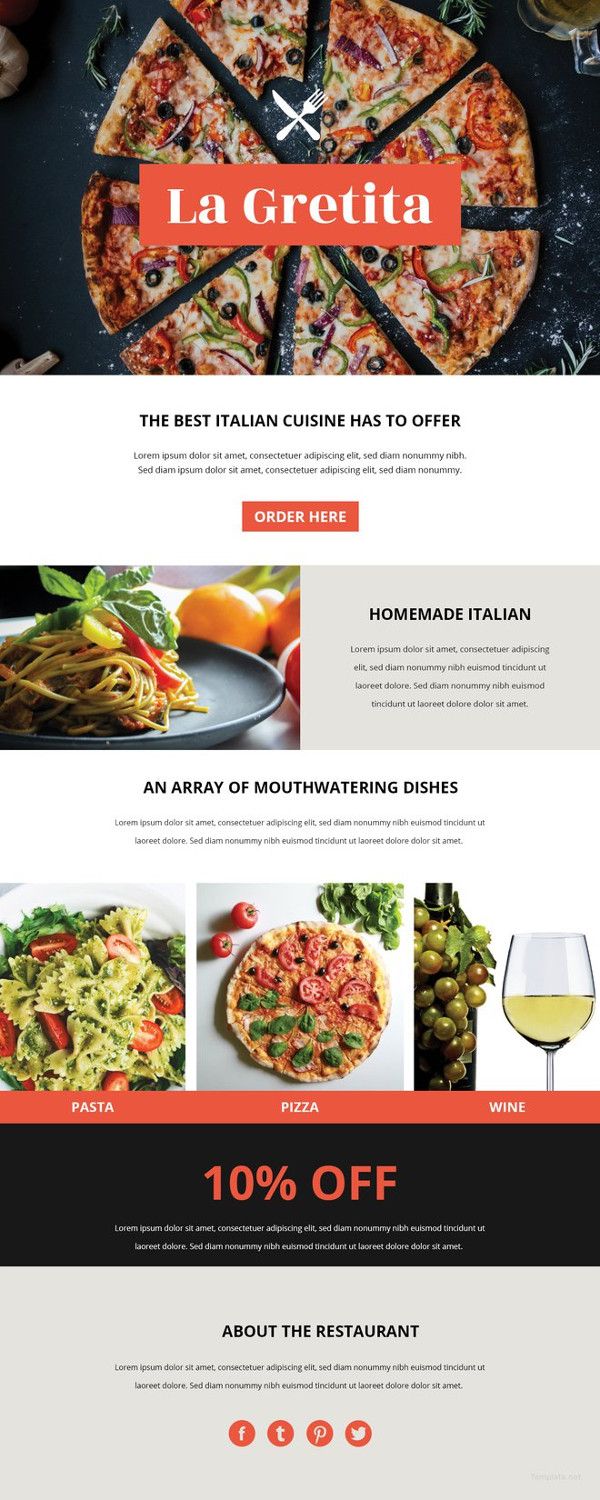
source: Pinterest (https://www.pinterest.com/pin/70016969198750618/)
Welcome emails boast an incredible 91.43% open rate—making them your most powerful opportunity to engage new subscribers.
Example welcome sequence:
| Timing | Content Focus | |
|---|---|---|
| Welcome #1 | Immediate | Deliver promised incentive + restaurant story |
| Welcome #2 | 3 days later | Menu highlights + chef recommendations |
| Welcome #3 | 7 days later | Customer testimonials + popular dishes |
Campaign Monitor’s Automated Customer Journeys can trigger personalized welcome sequences immediately after signup, making new subscribers feel valued and increasing their likelihood to convert to diners.


#2) Promotional Emails That Drive Immediate Sales


Promotional emails are your revenue drivers—they create urgency and prompt immediate action. The key is to make them feel special, not spammy:
Limited-Time Offers
Create genuine scarcity with time-limited, targeted promotions:
- Flash sales – “Tonight only: Half-price appetizers from 5-7pm”
- Day-specific deals – “Tuesday Wine Night: 50% off all bottles”
- Weekend specials – “Weekend Brunch Special: Free mimosa with any entrée”
Seasonal Menu Launches
Seasonal menu changes provide perfect email opportunities:
- Preview new items – Give subscribers an exclusive first look
- Tell the story – Explain the inspiration behind seasonal dishes
- Create FOMO – Emphasize the limited-time nature of seasonal items
Holiday Promotions
Holidays represent major revenue opportunities for restaurants. Plan your email calendar around these key dates:
| Holiday | Email Send Timing | Promotion Ideas |
|---|---|---|
| Valentine’s Day | 2 weeks before + 3 days before | Special prix fixe menu, complimentary champagne |
| Mother’s Day | 3 weeks before + 1 week before | Family packages, gift card bonuses |
| Thanksgiving | 1 month before + 2 weeks before | Take-home meal packages, reservation reminders |
| Christmas | 6 weeks before + 3 weeks before + 1 week before | Holiday party bookings, gift card promotions |
| New Year’s Eve | 3 weeks before + 1 week before | Special menu, entertainment details |
#3) Loyalty Program Emails That Build Relationships


Loyalty programs are proven to increase customer lifetime value. Your email strategy should nurture these valuable relationships:
Points Updates & Reward Availability
Keep members engaged by regularly updating them on their status:
- Points balance notifications – “You’re only 50 points away from a free entrée!”
- Reward redemption reminders – “Don’t forget to use your birthday reward this month”
- Level-up announcements – “Congratulations! You’ve reached Gold status”
Campaign Monitor’s Loyalty Journeys automate the entire process, sending personalized messages at every stage of the customer’s journey. Whether it’s rewarding customers when they hit a certain points threshold or reminding them to use a reward, Campaign Monitor helps keep your loyalty program on track and your customers engaged.


Exclusive Member-Only Offers
Make loyalty members feel special with exclusive access:
- Early access – Preview new menu items before the public
- Member-only events – Special tastings, chef’s tables, cooking classes
- Bonus point opportunities – “Double points on all desserts this weekend”
Anniversary Celebrations
Acknowledge and celebrate your relationship with customers:
- Sign-up anniversaries – “It’s been a year since you joined our family!”
- First visit milestones – “Remember your first visit? Come celebrate with us”
- Loyalty program achievements – “You’ve earned 10 rewards with us! Here’s something special”
#4) Event Invitations That Create Excitement
Special events create memorable experiences that strengthen customer relationships:
- Special dining events – Wine pairing dinners, chef’s tables, tasting menus
- Entertainment nights – Live music, trivia nights, themed parties
- Cooking classes – Hands-on experiences with your chef
- Private event promotion – Corporate events, holiday parties, catering services
Here’s how you can structure your emails:
| Email Type | Timing | Content Focus |
|---|---|---|
| Save the Date | 2–3 weeks before event | Brief event intro, date/time, teaser image, RSVP button |
| Formal Invitation | 10–14 days before event | Full event details, value proposition, CTA to book or RSVP |
| Reminder #1 | 5–7 days before event | Highlight key attraction (e.g., chef, performer), reinforce urgency |
| Reminder #2 | 1–2 days before event | Final reminder, directions/parking, FAQ, clear call to action to RSVP |
| Post-Event Thank You | 1–2 days after event | Appreciation message, recap photos, social share link, feedback request |
#5) Reservation Confirmations & Reminders
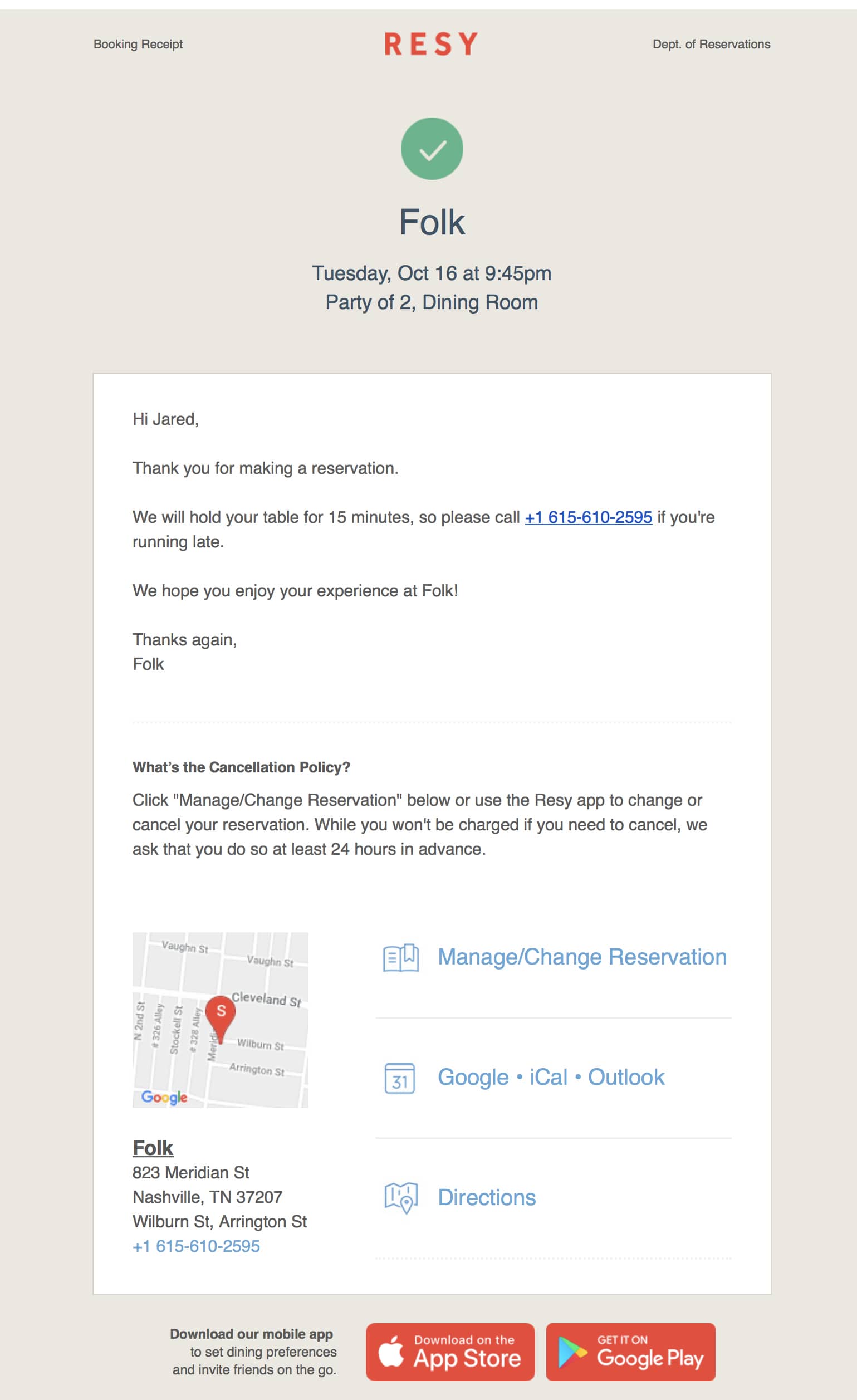

Transactional emails have 8x the open rates than any other type of email—making them powerful opportunities to enhance the dining experience:
| Email Type | Timing | Content Focus |
|---|---|---|
| Booking Confirmation | Immediately after reservation | – Reservation details (date, time, party size) – Pre-visit info (parking, dress code) – Upsells (wine pairing) – Cancellation/modification policy |
| Pre-Visit Reminder #1 | 24-48 hours before reservation | – Reminder of reservation – Special occasion acknowledgment – Current specials – Weather suggestions |
| Pre-Visit Reminder #2 | 4-6 hours before reservation | – A gentle reminder – Unique experiences (e.g., live music) – CTA for requests or dietary restrictions |
| Post-Visit Thank You | 1-2 days after the event | – Appreciation message – Social media share request – Special offer for next visit – Request for review |
Campaign Monitor’s Transactional Email features ensure these critical communications arrive promptly and reliably. With pixel-level design capabilities, you can customize every detail to match your brand, while ensuring mobile responsiveness for a seamless experience on all devices.
#6) Re-engagement Campaigns That Win Back Customers


Source: Pinterest (https://www.pinterest.com/pin/441141726012476528/)
Don’t let inactive customers slip away. Re-engagement campaigns can revive these valuable relationships:
- “We miss you” messages – Sincere notes acknowledging their absence
- Incentives to return – Special offers exclusively for inactive customers
- Updates on changes – New menu items, renovations, or chef announcements
- Feedback requests – “We’d love to know how we can improve”
#7) Birthday and Anniversary Emails


Source: ReallyGoodEmails (https://files.reallygoodemails.com/emails/50th-anniversary-celebration.png)
Celebrate your customers’ special occasions:
- Automated birthday offers – Send special offers 7-10 days before their birthday
- Personalized messaging – Make the offer feel exclusive and special
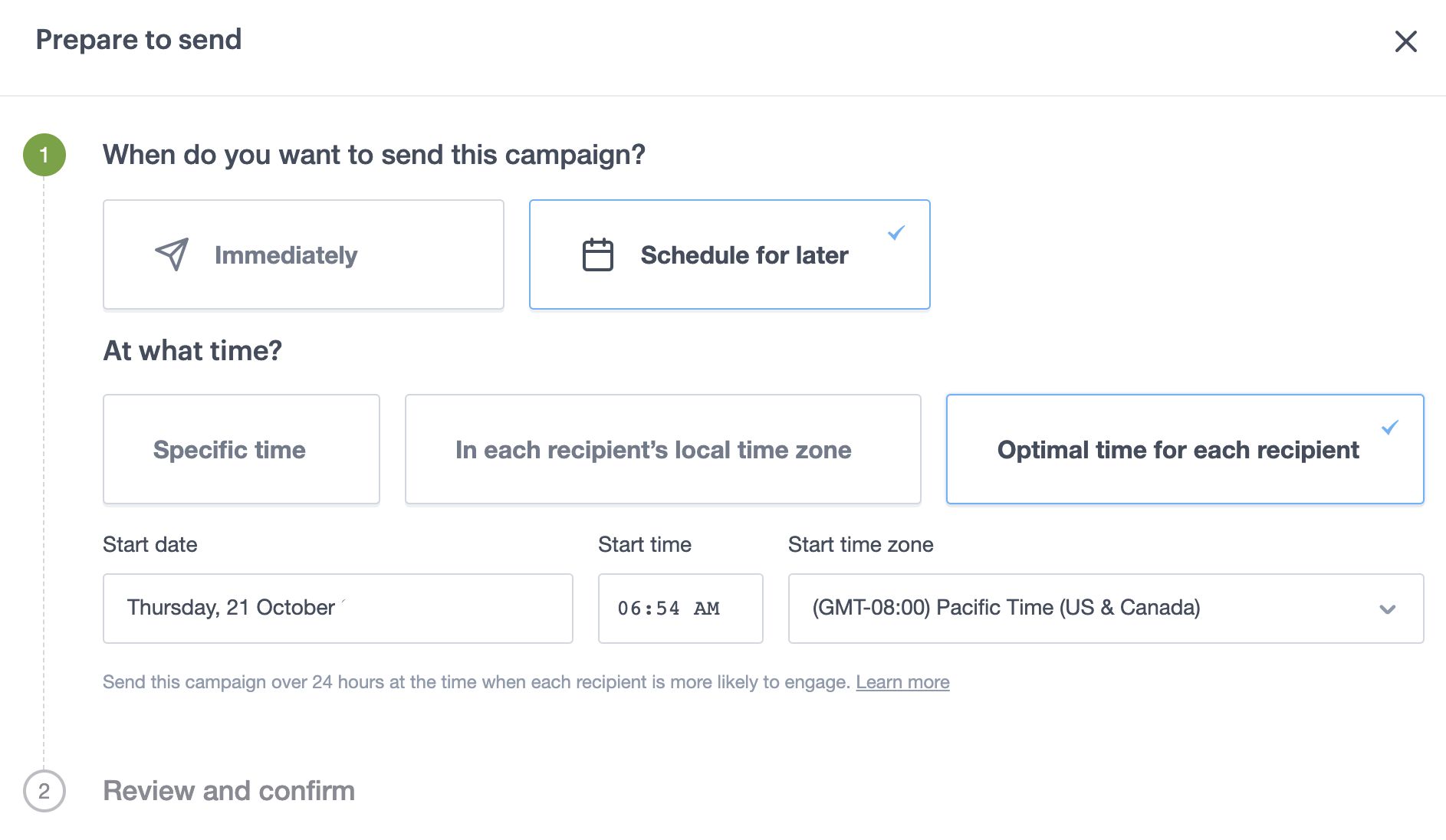
Using Campaign Monitor’s Send Time Optimization, you can deliver these special occasion emails at the ideal time for each recipient, increasing open rates.

#8) Post-Dining Follow-ups


source: Pinterest (https://www.pinterest.com/pin/992551205356202562/)
Nurture the relationship after the meal:
| Timing | Content Focus | |
|---|---|---|
| Thank You | 24 hours after visit | “Thank you for dining with us! We hope you enjoyed your meal at [Restaurant Name].” |
| Review Request | 48 hours after the visit | “We value your feedback! Could you take a moment to leave us a review on [platform]? As a thank you, enjoy 10% off your next meal when you share your thoughts!” |
| Return Incentive | 20-30 days after visit | “We miss you! Come back and enjoy 20% off your next meal at [Restaurant Name]. Use code RETURN20 when making a reservation. We’d love to have you back and share our latest menu additions!” |
#9) Abandoned Online Order Recovery
Recover potentially lost revenue:
- Timely reminders – Send within 1-2 hours of abandonment
- Incentives – Offer free delivery or a small discount to complete the order
- Suggested alternatives – Recommend similar menu items
Campaign Monitor’s behavior-triggered workflows can automatically send these recovery emails, recapturing potentially lost revenue.
Building Your Restaurant Email List
The foundation of successful restaurant email marketing is a quality list of engaged subscribers. Without this, even the most creative campaigns will fall flat. Here’s how to build a robust list that actually converts to reservations:
Website Sign-Up Forms That Convert
Your website is prime real estate for capturing email addresses, but generic “Join our newsletter” forms won’t cut it. Instead:
- Offer immediate value – Provide a compelling reason to subscribe like “Get a free appetizer when you join” or “Be the first to know about secret menu items”
- Place forms strategically – Position sign-up forms on high-traffic pages (homepage, menu page, reservation page) and use exit-intent pop-ups to capture leaving visitors
- Keep it simple – Ask only for essential information (name and email) to reduce friction
Campaign Monitor’s Custom Form Builder creates branded, responsive signup forms that match your restaurant’s aesthetic without requiring development work. You can create different forms for different pages and track which ones convert best.


QR Codes: The Table-to-List Pipeline
QR codes have made a massive comeback post-pandemic and are perfect for in-restaurant list building:
| QR Code Placement | Incentive | Call-to-Action |
|---|---|---|
| Table tents/stands | Free dessert on the next visit | “Scan for a sweet treat on your next visit!” |
| Printed on receipts | 10% off your next order | “Scan to save on your next meal” |
| Menu inserts | Early access to seasonal menu | “Be the first to try our new dishes” |
| Bathroom mirrors | 20% off on all items during happy hour (Mondays 5-7 PM) | “Never miss a happy hour again” |
Pro tip: Create custom QR codes for different placements to track which locations generate the most sign-ups. This helps optimize your in-restaurant marketing strategy.
Point-of-Sale Collection
Train your staff to collect emails during the payment process with a clear value proposition:
“Would you like to join our email list to receive a complimentary appetizer on your next visit?”
Important considerations:
- Ensure proper consent is obtained and documented
- Train staff on the specific benefits to mention
- Have a system for immediate delivery of the promised incentive
Social Media Lead Generation
Your social media followers are already interested in your restaurant—convert them to email subscribers:
- Run exclusive giveaways that require email sign-up
- Create “email subscriber only” content or offers
- Use Instagram’s “Email” button on your profile
- Promote your email-exclusive benefits in posts and stories
Restaurant Email Marketing Best Practices
Now that you understand the essential campaign types, let’s explore best practices that will maximize your results:
#1) Personalization Beyond “Dear [Name]”
Generic emails no longer cut it. Today’s diners expect personalized experiences:
- Segment by dining preferences – Create groups based on order history (wine lovers, vegetarians, dessert enthusiasts)
- Reference previous visits – “Last time you enjoyed our tiramisu…”
- Tailor recommendations – Suggest dishes based on past orders
According to Campaign Monitor research, personalized campaigns are 26% more likely to be opened
Example segmentation strategy:
| Segment | Criteria | Email Focus |
|---|---|---|
| First-time diners | One visit recorded | New menu items, restaurant story |
| Frequent diners | 5+ visits in 3 months | Loyalty program, VIP events |
| Special occasion visitors | Celebrated birthday/anniversary | Private dining options |
| Wine enthusiasts | Ordered wine with meals | Wine pairing events, wine specials |
| Weekend brunchers | Visited for brunch 2+ times | Brunch specials, new brunch items |
Resy leveraged Campaign Monitor’s segmentation tools to deliver targeted, localized campaigns to subscribers. In the image, we can see how Resy used a “Hit List” email to promote the best restaurants and events in Los Angeles. By focusing specifically on their LA subscribers, Resy was able to showcase local spots and offer personalized recommendations.


#2) Mobile Optimization
Over 70% of people read their emails on a mobile app, making mobile optimization non-negotiable:
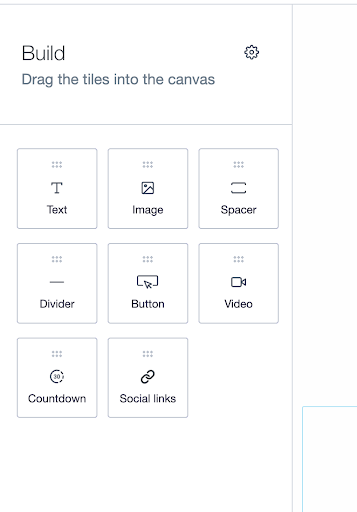
- Use single-column layouts – Ensure easy reading on small screens
- Create large, touch-friendly buttons – Make sure CTAs are at least 44 x 44 pixels
- Keep subject lines short – 41 characters or 7 words perform best
Campaign Monitor’s Responsive Templates are mobile-optimized, ensuring your emails look perfect on any device. You can either choose a template from the collection or design one with your branding using the drag-and-drop editor.

#3) Visual Content Strategy
For restaurants, visuals are particularly crucial—they trigger cravings and drive action:
- High-quality food photography – Invest in professional photos of signature dishes
- Behind-the-scenes content – Show your kitchen, chef, and staff in action
- User-generated content – Feature photos from happy customers (with permission)
- Consistent branding – Maintain visual identity across all emails
Pro tip: Create a visual content calendar that aligns with your menu changes and seasonal offerings. This ensures you always have fresh, relevant images for your campaigns.
#4) Compelling Calls-to-Action
Every restaurant email should have a clear, action-oriented CTA:
- Use action verbs – “Reserve Now,” “Order Online,” “View Menu”
- Create contrast – Make buttons stand out with contrasting colors
- Focus on one primary CTA – Multiple CTAs compete for attention
- Create urgency – “Book before we fill up” or “Limited availability”
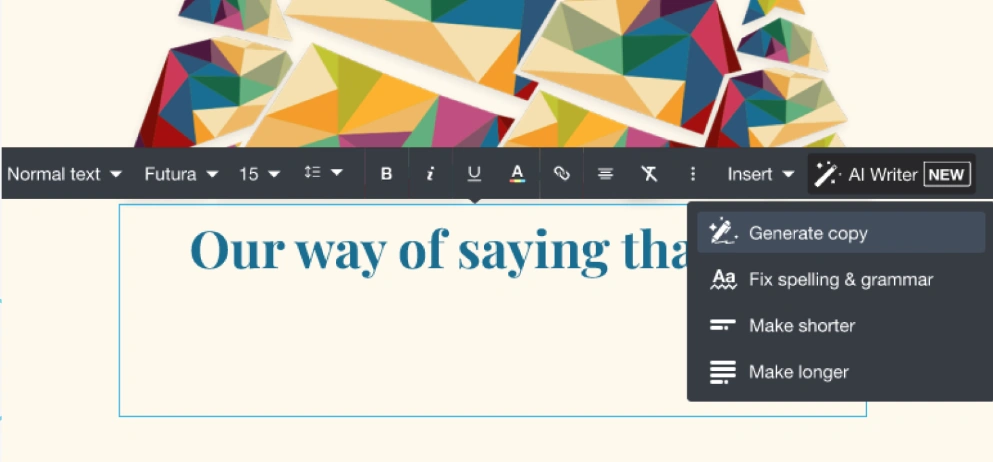
Campaign Monitor’s AI Writer can help optimize CTAs for different audience segments to increase conversions.

Measuring Restaurant Email Marketing Success
To optimize your email strategy, you need to track the right metrics:
Key Performance Indicators
According to Campaign Monitor’s 2022 Email Marketing Benchmarks Report, the table below shows the key email engagement benchmarks for the restaurant, food, and beverage industry.
| Metric | Restaurant Industry Benchmark | What It Tells You |
|---|---|---|
| Open rate | 18.5% | Email deliverability and subject line effectiveness |
| Click-through rate | 2.0% | Content and offer relevance |
| Click-to-Open Rates | 10.5% | Engagement and the quality of the email content |
| Unsubscribe rates | 0.1% | Satisfaction with email content and frequency |
Campaign Monitor’s Live Performance Dashboards track these metrics in real-time, allowing quick optimization.


A/B Testing for Restaurants
Continuously improve your results by testing:
- Subject line variations – Test length, personalization, and offer inclusion
- Image options – Compare food photos vs. people enjoying meals
- Offer testing – Test percentage discounts vs. free items
- Send time testing – Find the optimal day and time for your audience
Use Campaign Monitor’s A/B testing feature to test subject lines, content blocks, or CTAs to optimize results based on real user behavior. For example, test different offers like “Get 20% off your next meal” vs. “Free appetizer with your next meal” to see which one generates a higher conversion rate. Best part? The system automatically sends the winning version to your list.


Restaurant Email Marketing Calendar
Planning your email calendar strategically ensures consistent customer engagement without overwhelming subscribers:
The Perfect Timing Framework for Restaurant Emails
Follow the 3-2-1 Restaurant Email Cadence:
- 3 days before weekend: Send weekend specials/events emails (Wednesday for Saturday)
- 2 hours before typical meal decision time: Send same-day promotions
- 1 week before holidays: Begin special occasion marketing
Monthly Planning Calendar
| Week | Email Focus | Example |
|---|---|---|
| Week 1 | Monthly newsletter with seasonal menu items | “April’s Fresh Spring Menu Has Arrived!” |
| Week 2 | Loyalty program update and exclusive member offers | “Your Points Update + Member-Only Wine Tasting” |
| Week 3 | Educational content (chef tips, ingredient spotlights) | “The Story Behind Our House-Made Pasta” |
| Week 4 | End-of-month promotion to boost sales goals | “Last Chance: April Prix Fixe Menu Ends Sunday” |
Optimal Send Times by Email Type
- Lunch promotions: 9:30-10:30 AM same day
- Dinner promotions: 3:00-4:00 PM same day
- Weekend event announcements: Wednesday morning
- Loyalty program updates: Tuesday (lowest restaurant traffic day)
Campaign Monitor’s Send Time Optimization automatically determines the best send times for your audience based on past engagement data, taking the guesswork out of scheduling.
What Comes After Full Tables? Even More Success with Campaign Monitor!
You’ve now learned how email marketing can transform your restaurant’s business—filling tables, increasing order values, and building lasting customer relationships.
The strategies we’ve covered go beyond basic email blasts to create personalized, engaging experiences that keep your restaurant top-of-mind when diners are deciding where to eat.
Key takeaways to remember:
- Build a quality email list through strategic sign-up opportunities with compelling incentives
- Create a mix of promotional, relationship-building, and automated emails
- Personalize communications based on customer preferences and behavior
- Optimize for mobile and use high-quality visuals that showcase your food
Campaign Monitor provides all the tools restaurants need to execute effective email marketing that builds relationships and drives revenue—from easy-to-use templates to powerful automation and personalization features.
Ready to fill more tables? Start implementing these strategies today and watch your restaurant thrive.
Read Next:
- How Gusto Italian Achieved a 66% Open Rate Using Campaign Monitor
- How Resy Used Campaign Monitor to Drive Bookings