A practical, numbers-first breakdown
Most marketing channels get more expensive as you grow. Email does the opposite.
This article breaks down the 4 drivers of email marketing ROI, with simple math so you can apply it immediately.
At its core, email marketing functions as a reliable revenue engine. You start by building a base of subscribers, an audience you own and can reach directly. From there, you engage them through targeted campaigns and automated journeys that nurture interest, drive action, and keep your brand top of mind. Over time, this consistent engagement compounds, turning one-time interactions into predictable, repeatable revenue. Once that system is in place, every new subscriber increases your upside.
1. Low marginal cost creates high profit potential
Most marketing channels scale linearly. Spend more, earn more, and the moment you stop investing, growth slows or stops altogether. Email breaks that pattern. Once you’re paying for your platform, the cost of reaching your audience doesn’t rise in the same way, whether you’re sending to 1,000 people or 100,000. That means your ability to generate revenue can grow without a proportional increase in spend, making email one of the few channels where scale actually improves efficiency.
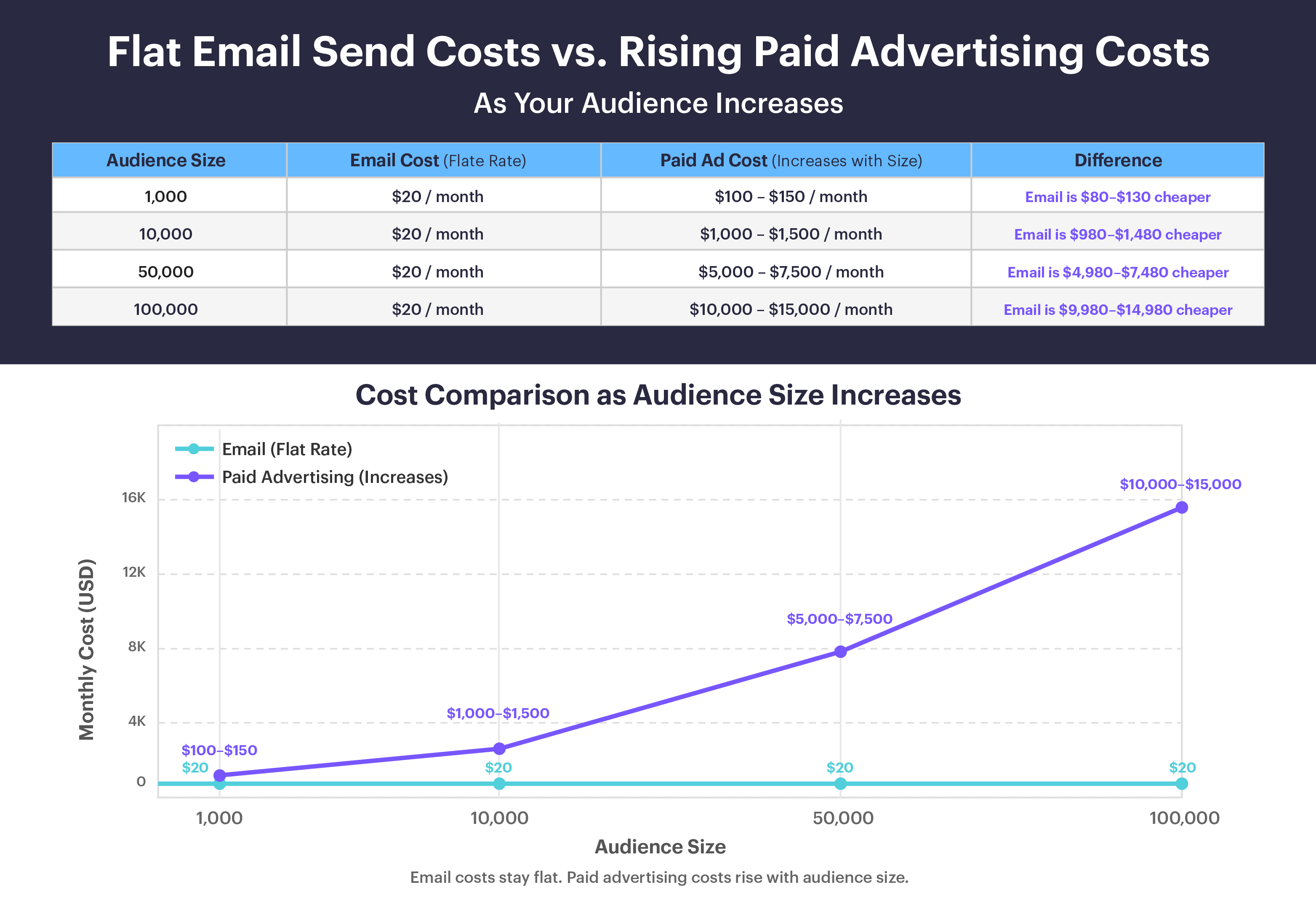
This is where the leverage comes from. As your list grows, cost stays relatively flat, and email marketing revenue grows with reach.
What this means:
- No pay-per-click
- No rising CPMs
- No scaling penalties
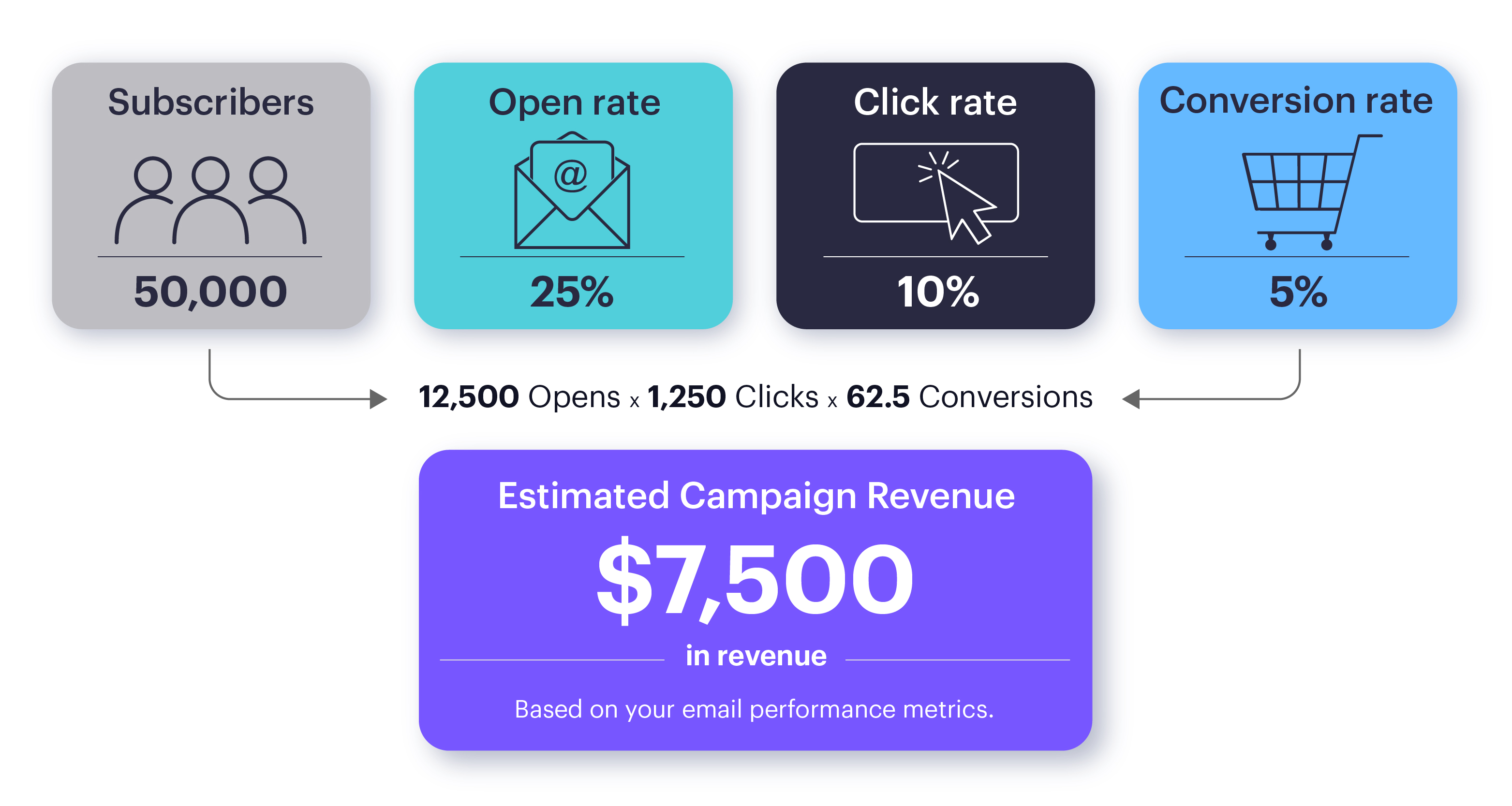
Simple campaign math. Let’s imagine you’re starting with:
- 10,000 subscribers
- 40% open rate
- 5% click rate
- 5% conversion rate
- $50 AOV
With approximately 100 sales, you’re earning $5,000 per campaign
Now scale to 50,000 subscribers, and that math turns into $25,000 in revenue with cost nearly unchanged.
2. Repeat purchases drive real profit
Most brands focus heavily on acquiring new customers, but real profitability comes from what happens after that first purchase. Email plays a critical role here, powering repeat purchases through consistent, automated engagement. It keeps your brand top of mind, brings customers back at the right moments, and creates ongoing opportunities to increase lifetime value—turning one-time buyers into long-term revenue.
Email is how you:
- stay top of mind
- bring customers back
- increase lifetime value
Simple repeat purchase math:
- 1,000 customers
- $50 AOV
→ Initial revenue = $50,000
Now, add email:
- 30% buy again
→ Extra revenue = $15,000
No extra ad spend. No new acquisition costs.
3. Lifecycle monetization captures more revenue
Most businesses optimize for the first purchase. Email lets you monetize the entire customer journey.
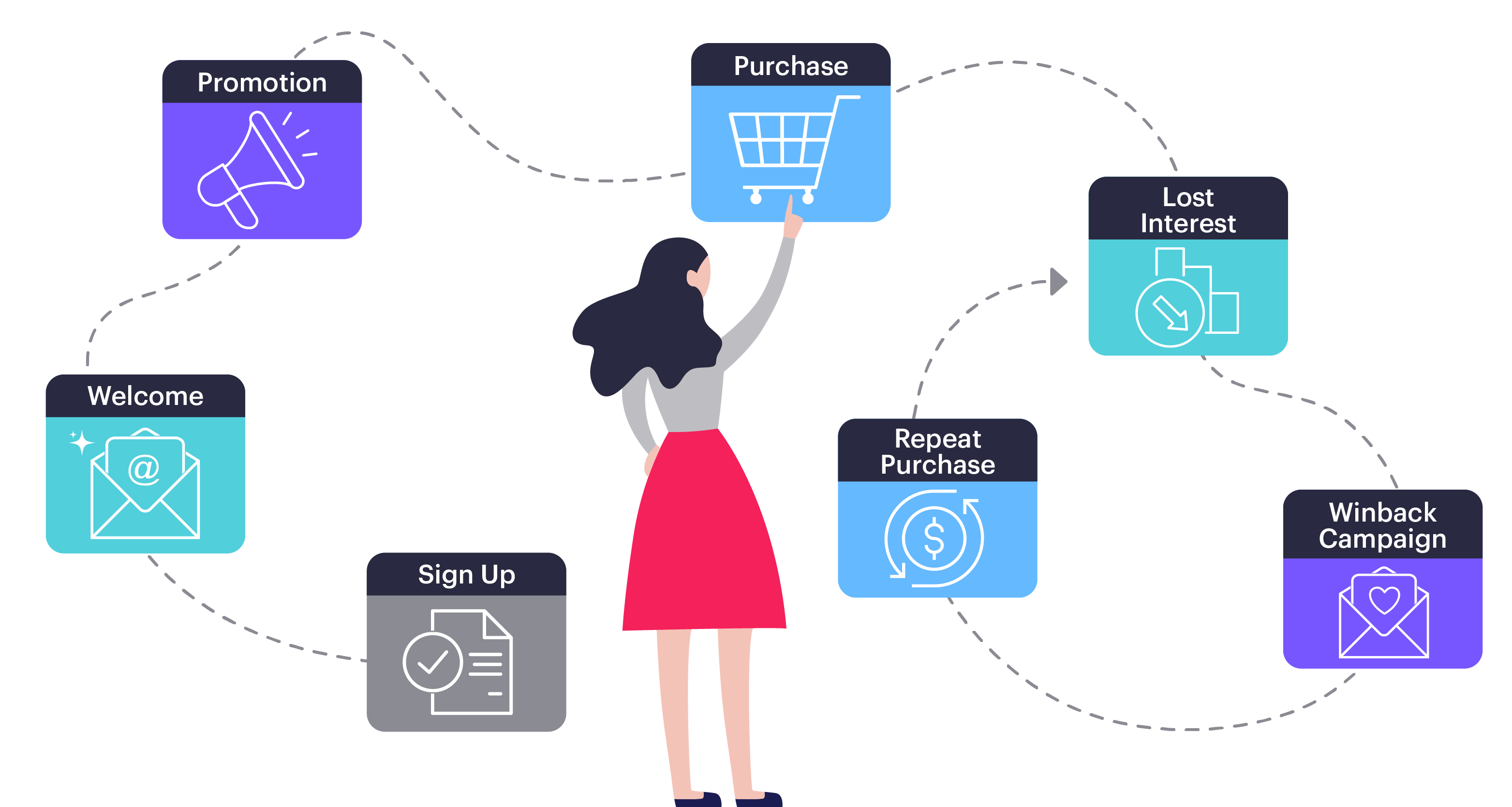
Across the lifecycle:
- Welcome → convert new subscribers
- Nurture → build trust
- Promotion → drive first purchase
- Post-purchase → increase order value
- Re-engagement → win back inactive users
Each stage is another opportunity to generate revenue.
Lifecycle revenue example:
- 5,000 new subscribers/month
Conversions:
- 5% → 250 buyers
- 20% repeat → 50 buyers
- 10% upsell → 25 buyers
With $40 AOV:
- Initial: $10,000
- Repeat: $2,000
- Upsell: $1,500
Total = $13,500
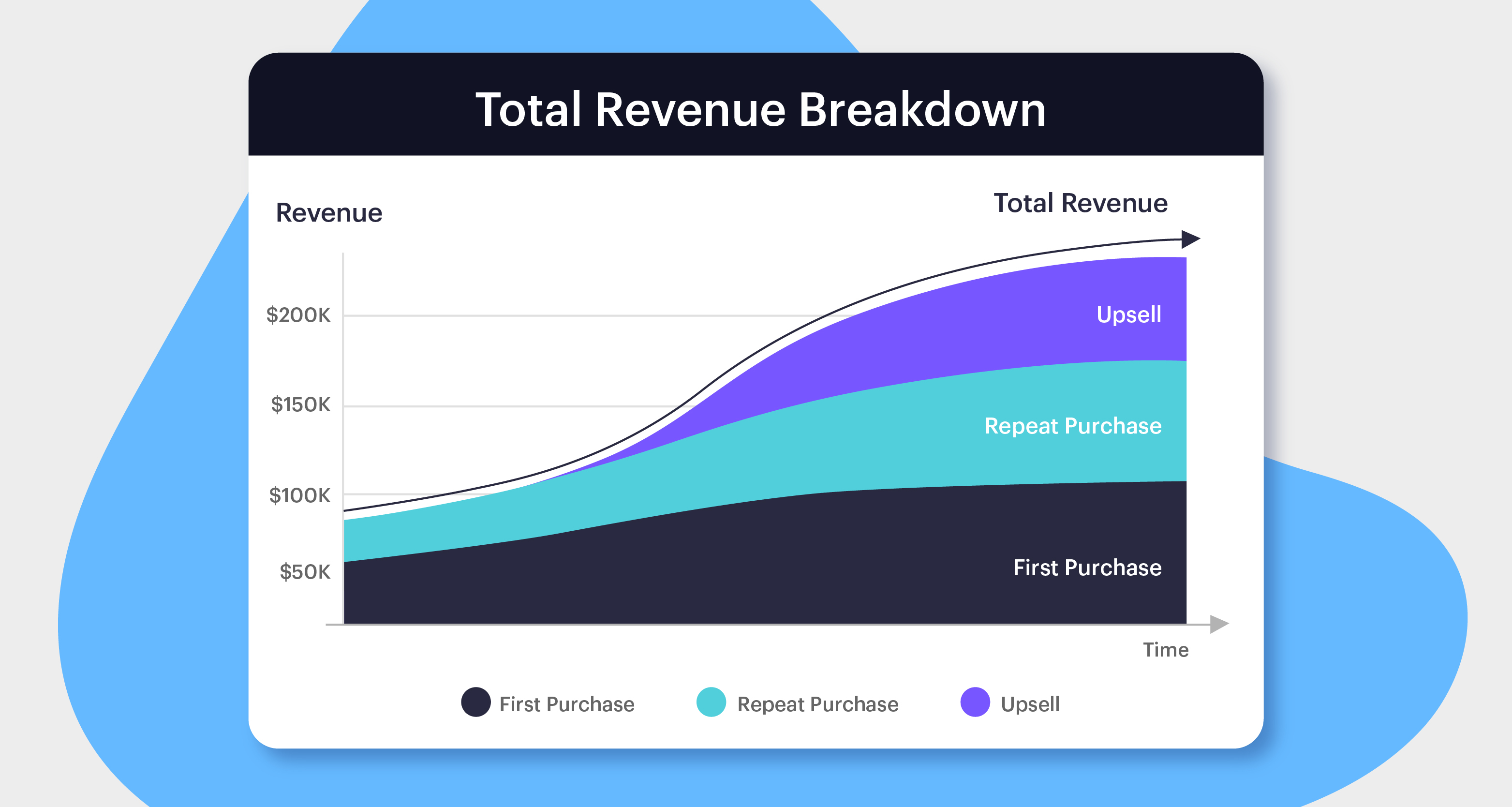
Without lifecycle email, you likely stop at $10,000.
4. Email automation creates revenue on autopilot
This is where email becomes a true system. Instead of manually sending every message, you build flows that run automatically:
Core automated email flows to implement:
- Welcome sequences
- Abandoned cart recovery
- Post-purchase upsells
- Re-engagement campaigns

These flows trigger based on behavior:
- Someone signs up
- Someone abandons a cart
- Someone makes a purchase
And, they run continuously.
Quick math:
- 100 abandoned carts/day
- 10% recovered
- $60 AOV
This equates to $600/day, or, more importantly, $18,000/month, from just a single automation.
At the end of the day, paid ads are powerful, but inherently constrained. Costs tend to rise as you scale, performance can fluctuate, and revenue is tied directly to continued spend. Email operates differently. It gives you full ownership of your audience, control over how and when you reach them, and the ability to scale your efforts without proportional increases in cost—making it a more stable and efficient driver of long-term growth.
Email vs Paid Ads (Reality Check)
| Channel | Cost Structure | Scaling |
|---|---|---|
| Paid Ads | Pay per click | Cost increases |
| Fixed cost | Revenue scales |
Bottom line:
- Ads = linear growth
- Email = leveraged growth
How email revenue compounds over time
Email doesn’t just generate revenue, it compounds.
Every new subscriber increases:
- Future campaign revenue
- Automation output
- Customer lifetime value
Email isn’t just a channel; it’s an asset that grows over time.
Where email revenue gets lost
Most businesses aren’t underperforming because email doesn’t work.
They’re underperforming because key pieces are missing:
- No welcome flow
- No cart recovery
- No post-purchase upsell
- No re-engagement
Each gap = lost revenue.
At this point, the question isn’t if email works.
It’s how much revenue are you leaving on the table?
Quick start email ROI checklist
Use this quick start checklist below to implement proven high ROI email strategies immediately:
Build
- Add a lead magnet to capture emails
- Optimize signup forms
Automate
- Welcome sequence
- Abandoned cart flow
- Post-purchase emails
Optimize
- Segment your audience
- Track conversion rates
- Test subject lines
Why email is a predictable growth driver
Email works because it combines:
- low marginal cost
- high repeat purchase potential
- full lifecycle monetization
- automation-driven revenue
While other channels fluctuate, email quietly becomes your most predictable and scalable growth driver.
See how much revenue your email list could be generating
Use this email marketing ROI calculator to estimate your monthly email revenue, break down campaigns vs automations, and identify missed revenue opportunities.