Introduction
Email marketing remains one of the most powerful tools for accountants to nurture client relationships and attract potential clients. When done right, it delivers an impressive ROI of 4400%—making it a financial no-brainer for accounting firms looking to grow their practice.
- Discover how strategic segmentation can increase your email engagement by targeting the right clients with the right messages
- Learn automation sequences that work while you sleep, nurturing leads and retaining clients through tax season and beyond
TL;DR
- Segment your audience – Divide your email list by client type (individual vs. business), service needs (tax, audit, advisory), and engagement level for targeted messaging
- Personalize beyond names – Include industry-specific insights, reference past interactions, and tailor content based on client’s preferences
- Optimize for mobile first – Use single-column layouts, larger fonts (14px minimum), and thumb-friendly CTAs
- Create compelling subject lines – Keep it around 41 characters, include benefit-driven language, and consider adding urgency
- Automate client journeys – Set up welcome sequences, tax deadline reminders, quarterly check-ins, and re-engagement campaigns for consistent communication
- Test and measure everything – Track open rates, click-through rates, and conversion metrics to continuously improve performance
- Add value with every send – Provide actionable financial insights, tax-saving strategies, etc.

9 Best Email Marketing Strategies for Accountants
If you’re running an accounting business, email marketing is one of the best ways to connect with your prospective clients.
Whether you’re sharing tips, promoting your accounting services, or launching an email marketing campaign, these strategies will help you make the most of every email you send. Check out the top tips below!
#1) Use Lead Magnets to Build Your Email List
Growing your accounting practice starts with a quality email list. Instead of purchasing lists (which violates regulations and yields poor results), create valuable lead magnets that attract your ideal clients.
Effective lead magnets for accountants include:
- Tax preparation checklists customized for different business types
- Financial calculators that help prospects understand potential tax savings
- Free webinars addressing common accounting pain points
- Industry news and guides on financial regulations and compliance
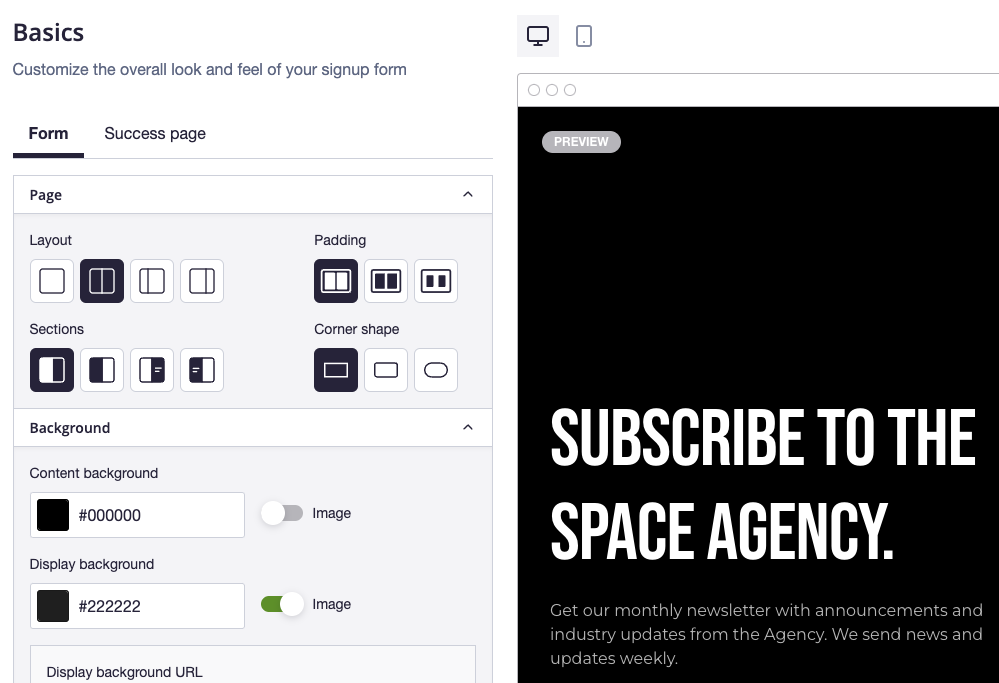
P.S. Our Custom Form Builder lets you create responsive signup forms, landing pages, and subscribe buttons, all fully branded to match your style. No development work needed—just drag, drop, and go!
#2) Ensure Your Emails are Optimized for Mobile
With most people checking emails on mobile devices, optimizing for smartphones isn’t optional—it’s essential for accounting firms that want their expertise to reach clients wherever they are.
Mobile optimization best practices:
- Use single-column layouts that adapt to smaller screens
- Increase font size to 14px minimum for body text
- Make CTAs thumb-friendly (at least 44×44 pixels)
- Keep the subject line short – 7 words or 41 characters are recommended
- Test your emails across multiple devices before sending
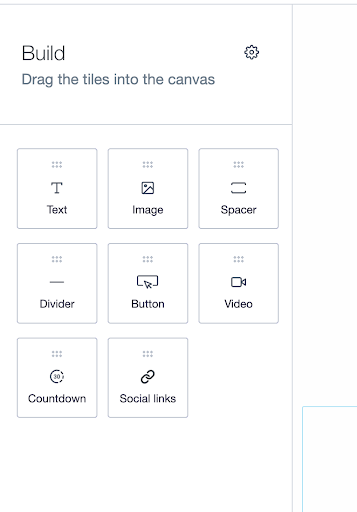
Side Note: Our Drag-and-Drop Email Builder lets you design professional emails in no time, with a simple, no-code interface. Plus, you can also choose from a library of Responsive Templates that are mobile-optimized for everything from promotions to newsletters!
#3) Use Advanced Segmentation for Highly Targeted Campaigns
Segmentation is where accounting firms can truly shine with their email marketing efforts. By dividing your list strategically, you can deliver hyper-relevant content that speaks directly to each client’s needs.
Effective segmentation strategies for accountants:
- By client type: Individual taxpayers vs. small businesses vs. corporations
- By service needs: Tax preparation, audit, advisory, bookkeeping
- By industry: Construction, healthcare, retail, etc.
- By lifecycle stage: Prospect, new client, established client
- By engagement level: Active vs. dormant clients
Example segmentation approach:
| Segment | Content Focus | Schedule |
|---|---|---|
| Small Business Owners | Cash flow management, quarterly tax planning | Tuesday mornings |
| Individual Clients | Personal tax strategies, retirement planning | Sunday evenings |
| Tax-Only Clients | Tax law updates, deadline reminders | 60 days before deadlines |
| Advisory Prospects | Business growth insights, case studies | Wednesday afternoons |
BTW, with our Advanced Segmentation feature, you can build audience segments using any subscriber data, making your campaigns more relevant and higher-performing.

#4) Personalize Your Emails (Non-Negotiable)
For accounting firms, personalization means delivering valuable content that addresses specific financial concerns and demonstrates your understanding of their unique situation.
Personalization strategies that work:
- Address recipients by name and reference their business
- Include industry-specific insights relevant to their sector
- Reference past interactions or services provided
- Tailor content based on business size and complexity
- Use dynamic content blocks that change based on subscriber data
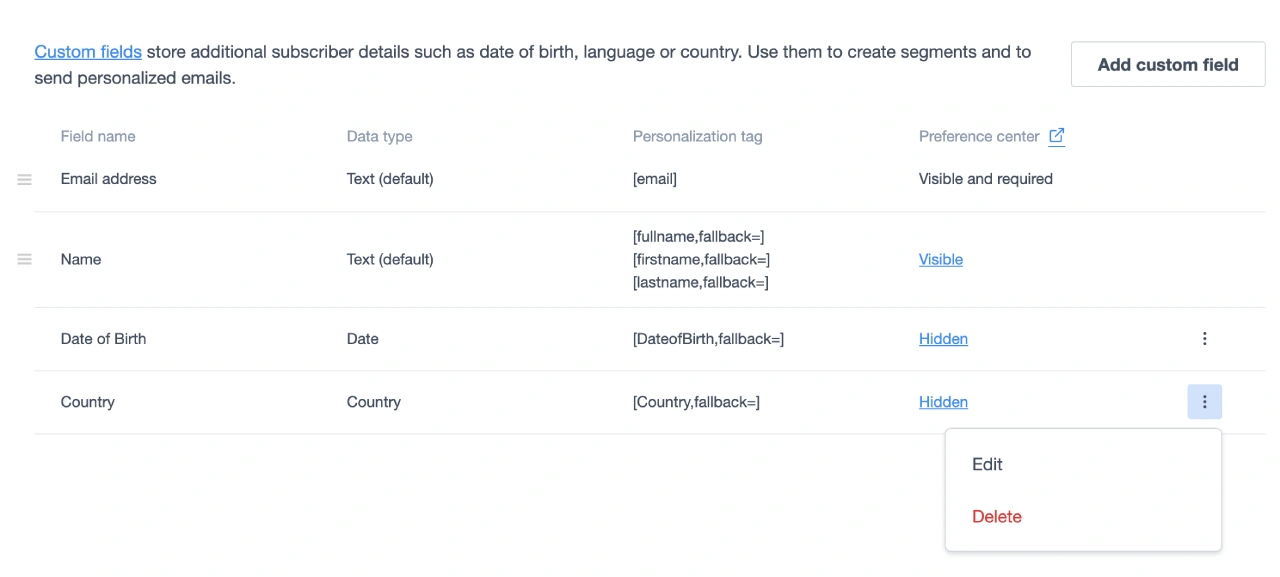
Our personalization features allow you to automatically insert custom fields like client name, business type, or last meeting date—creating emails that feel individually crafted while saving you valuable time.
#5) Ensure Your Content Answers Subscribers’ Questions
The most effective accounting emails anticipate and address client questions before they’re asked. This positions your firm as proactive and attentive to client needs.
Content strategies that build trust:
- Explain complex tax changes in simple, actionable language
- Provide timely reminders about upcoming financial deadlines
- Share case studies demonstrating how you’ve helped similar clients
- Offer actionable tips clients can implement immediately
- Address FAQs you commonly receive during tax season
For example, instead of simply stating “new tax legislation has passed,” explain specifically how it impacts different client segments and what actions they should take now.
#6) Make Your CTAs and Subject Lines Urgent, Personalized, and Actionable
Your subject lines determine whether emails get opened, while CTAs drive the actions you want clients to take. Both need careful crafting to maximize effectiveness.
Subject line best practices:
- Include benefit-driven language
- Add urgency when appropriate (especially around tax deadlines)
- Personalize with recipient information when possible
- A/B test different approaches
Examples of effective accounting email subject lines:
- “[First Name]: Your 2025 Tax Strategy Is Missing This Key Element”
- “3 Days Left: Secure Your April 15th Appointment”
- “Q3 Tax Planning: 5 Opportunities for [Company Name]”
CTA best practices:
- Use action-oriented verbs (Schedule, Download, Secure)
- Create a sense of urgency or exclusivity
- Make the benefit immediately clear
- Ensure buttons stand out visually
- Limit to one primary CTA per email
BTW, With Campaign Monitor’s A/B Testing Engine, you can easily test subject lines, content blocks, or CTAs, optimizing your emails based on real user behavior for better performance. Additionally, Inbox & Spam Testing lets you preview emails across devices and check for spam risks before sending, ensuring your messages hit inboxes, not spam folders.

#7 Automate Your Email Marketing Campaigns
Automation allows accounting firms to maintain consistent client communication without consuming valuable staff time. Strategic automation workflows ensure you stay top-of-mind throughout the year, not just during tax season.
Key automation sequences to implement:
- Welcome sequence for new subscribers or clients
- Tax deadline reminder series with escalating urgency
- Quarterly check-in emails with relevant financial tips
- Service anniversary acknowledgments with loyalty offers
- Re-engagement campaigns for dormant clients
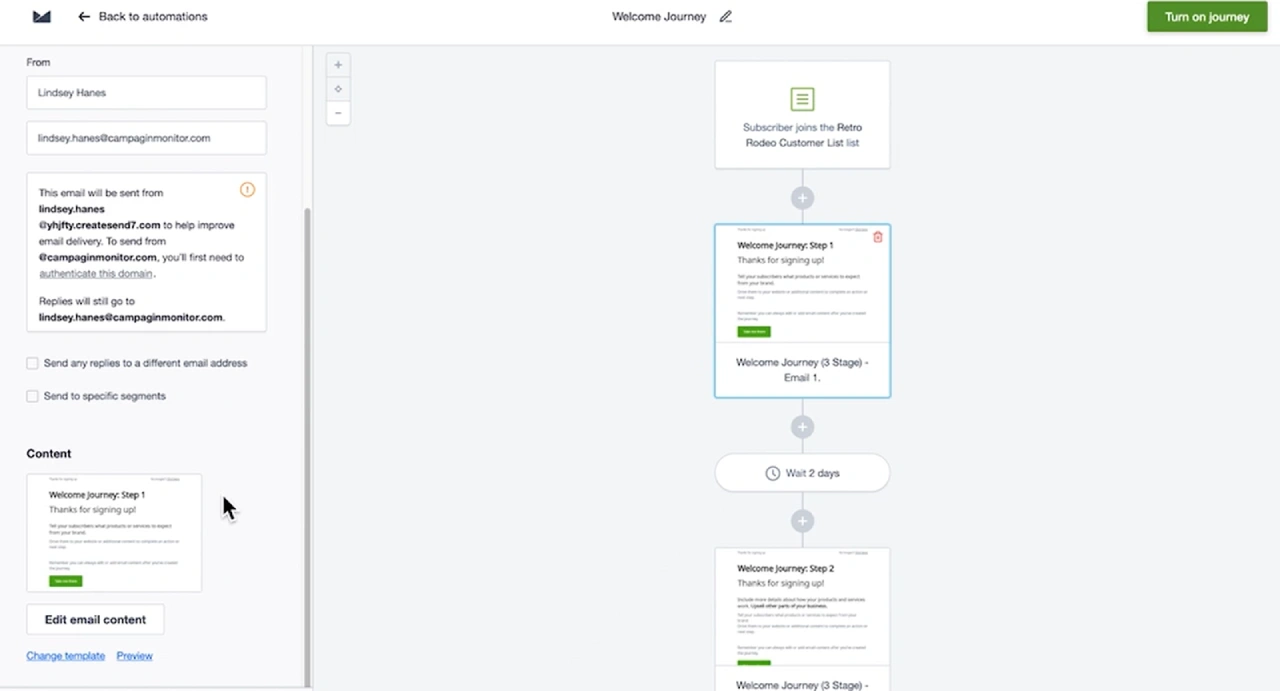
Campaign Monitor’s automation features make it easy to set up these sequences once and let them run automatically, triggering based on specific dates, client actions, or custom fields in your database.
#8) Regularly Test & Optimize
The most successful accounting business treat email marketing as an ongoing optimization process, continuously testing and refining their approach based on performance data.
Elements to test regularly:
- Subject lines (length, personalization, question vs. statement)
- Send times (day of week, time of day)
- Email length and content format
- CTA placement and wording
- Design elements and layout
Improvement strategies for key metrics:
| Metric | Improvement Strategy |
|---|---|
| Open Rate | A/B Test subject lines with personalization, questions, or urgency |
| Click-Through Rate | Place primary CTA above the fold with a clear benefit statement |
| Conversion Rate | Simplify checkout pages with less form fields, and an express checkout option |
| Bounce Rate | Clean your list every 6-9 months and verify emails before sending |
| Unsubscribe Rate | Segment more effectively and increase content relevance |
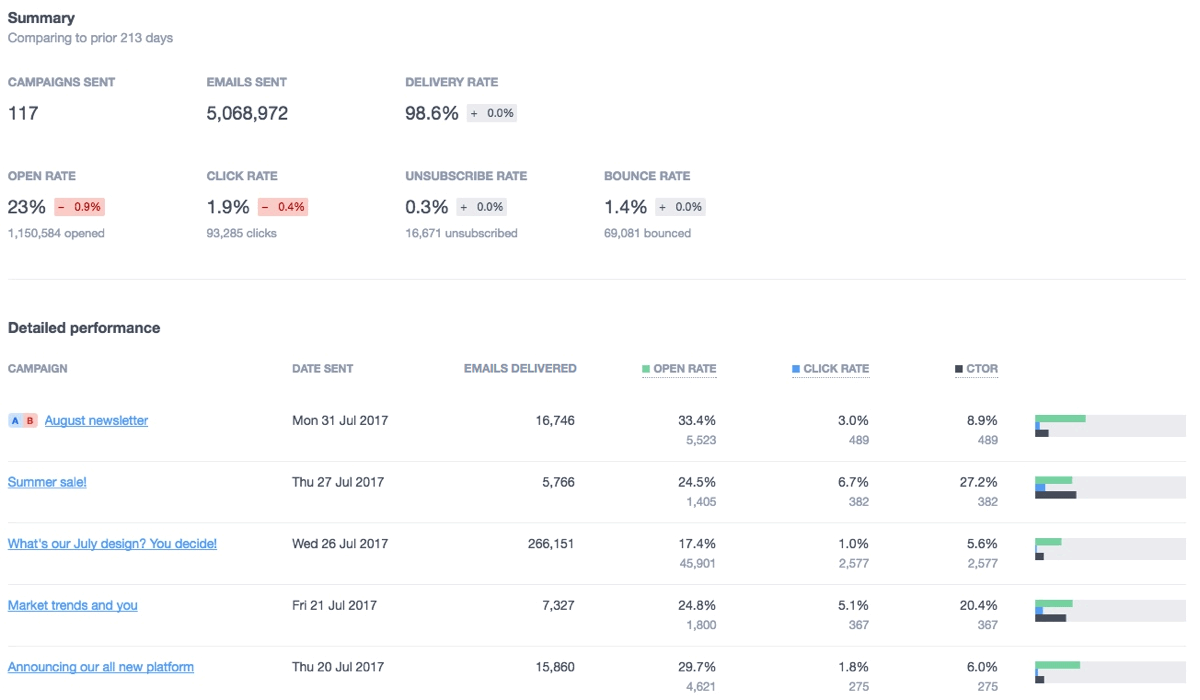
With our Live Performance Dashboards, you can monitor the results of your campaigns, automations, and transactional emails in real time.
Plus, our Full Engagement Reports give you detailed metrics on opens, clicks, bounces, shares, and unsubscribes across all email types!
Read Next:
4 Essential Email Campaigns for Accounting Firms
To run a successful email marketing campaign, you need more than just a few occasional emails. The key is consistency and strategy. These 4 essential email campaigns will help accounting firms stay connected with clients, nurture leads, and drive conversions.
#1) Welcome Sequences
The first emails you send set the tone for your client relationship. A well-crafted welcome sequence introduces your firm, establishes expectations, and guides new contacts toward becoming clients.
Welcome sequences should be triggered immediately after someone joins your list, with subsequent emails spaced 2-3 days apart to maintain engagement without overwhelming.
| Timing | Content Focus | |
|---|---|---|
| Welcome & Introduction | Immediate | Firm overview, team introduction, what to expect |
| Service Overview | Day 2-3 | Detailed explanation of services with client testimonials |
| Resource Sharing | Day 5-7 | Valuable downloadable resource or tool |
| Next Steps | Day 10 | Clear path to engagement with scheduling link |
By the way, with our Visual Journey Builder, you can create behavior-triggered workflows and deliver timely, personalized messages automatically, streamlining your entire customer journey!
#2) Educational and Advisory Emails
Educational content positions your firm as a trusted advisor rather than just a tax preparer. These emails demonstrate your expertise while providing genuine value to clients.
Regular educational emails keep your firm top-of-mind throughout the year and give clients a reason to engage beyond tax season.
| Email Type | Frequency | Content Examples |
|---|---|---|
| Tax Updates | As regulations change | Plain-language explanation of tax changes with impact assessment |
| Financial Planning | Monthly | Retirement planning, college savings, investment strategies |
| Business Advisory | Bi-weekly | Cash flow optimization, growth strategies, succession planning |
| Valuable Insights | Monthly | Sector-specific financial benchmarks and trends |
Just so you know, with Dynamic Content Blocks, you can show different content based on subscriber data within the same email—no cloning needed.
Plus, the Subscriber Preference Center lets contacts update their preferences and details, helping you improve data accuracy and targeting!
#3) Seasonal and Timely Campaigns
Accounting has natural cycles that create perfect opportunities for targeted email campaigns. Planning these campaigns in advance ensures you’re reaching clients at the moments when they need your expertise most.
| Campaign | Timing | Content Focus |
|---|---|---|
| Tax Prep Kickoff | 90 days before deadline | Checklist, appointment scheduling, early filing benefits |
| Mid-Season Update | 45 days before deadline | Status updates, last-minute tips, extension information |
| Post-Filing Review | 2 weeks after deadline | Tax planning for next year, additional service opportunities |
| Year-End Planning | November | Tax-loss harvesting, charitable giving, retirement contributions |
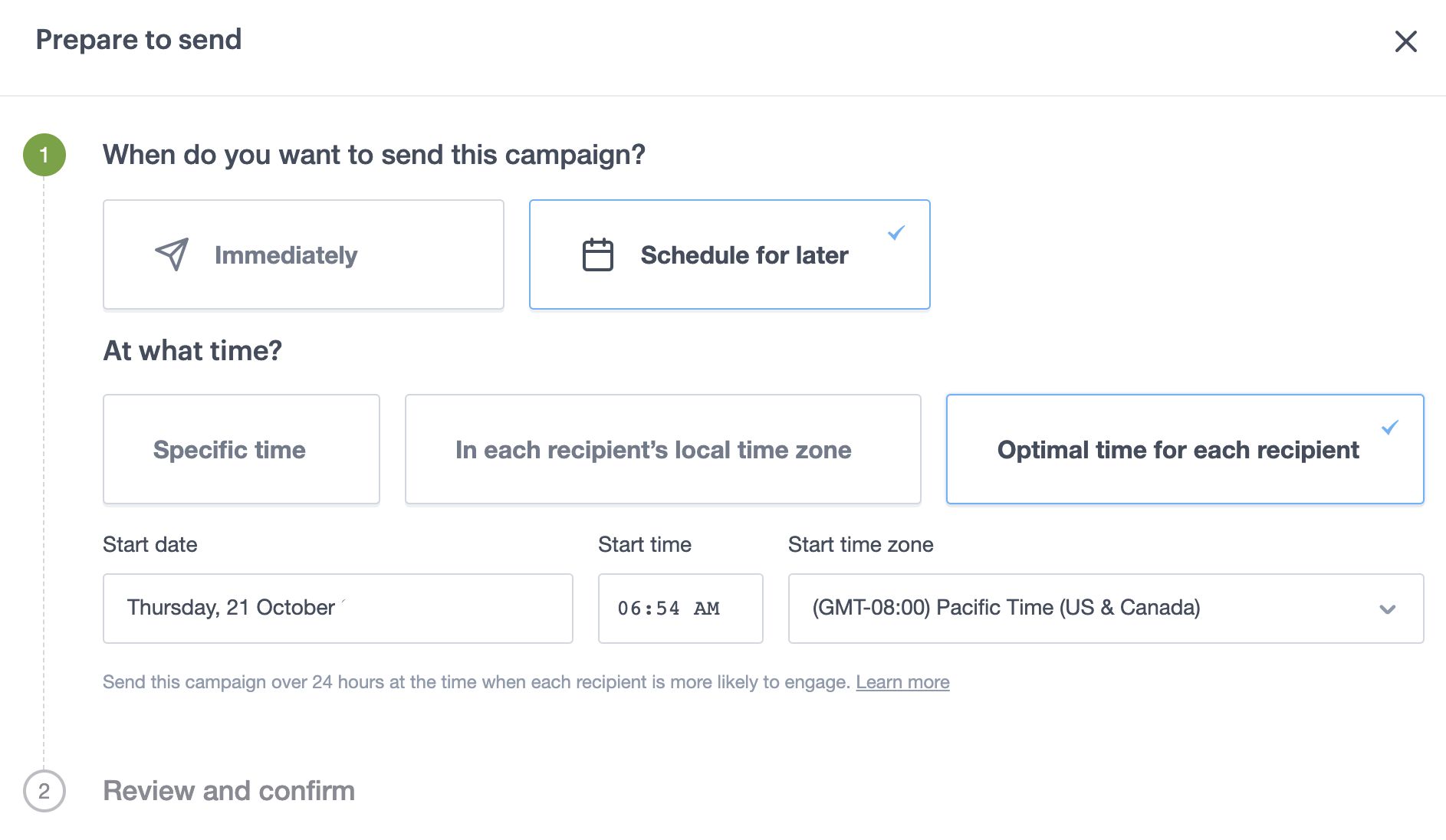
With Campaign Monitor’s Time Zone Sending, your time-sensitive messages will always arrive at the perfect moment, no matter where your recipients are.
Plus, Send Time Optimization uses machine learning to ensure each email is sent when your subscribers are most likely to engage!
#4) Client Retention and Reactivation Campaigns
Retaining existing clients is far more cost-effective than acquiring new ones. Strategic customer retention and reactivation campaigns help maintain strong client relationships and recover dormant accounts.
These campaigns should focus on demonstrating continued value and reinforcing the benefits of your ongoing relationship.
| Campaign | Trigger | Content Focus |
|---|---|---|
| Service Anniversary | Client anniversary date | Relationship recap, thank you message, loyalty offer |
| Feedback Request | Post-service completion | Short survey, testimonial request, improvement suggestions |
| Cross-Sell Opportunity | Based on service history | Related service introduction with specific benefit |
| Reactivation | 6-12 months of inactivity | “We miss you” message, service improvements, special offer |
Read Next:
Compliance and Best Practices for Accounting Email Marketing
Note: This content is for general informational purposes only and does not constitute legal, regulatory, or financial advice. Campaign Monitor is not intended for the storage or transmission of sensitive financial information, and users are responsible for ensuring compliance with applicable laws and regulations.
Accounting firms must navigate both email marketing regulations and professional ethics requirements. Compliance isn’t just about avoiding penalties—it’s about maintaining trust.
Key compliance areas to address:
- Anti-spam laws (CAN-SPAM, CASL, GDPR) requiring consent and unsubscribe options
- Data protection requirements for handling sensitive financial information
- Professional ethics considerations regarding solicitation and claims
- Client confidentiality in all communications, even marketing
Getting Started: Your 30-Day Email Marketing Plan for Accountants
Ready to kickstart your email marketing strategy? This 30-day plan is designed specifically for accountants looking to build stronger client relationships, attract new leads, and make the most of their email campaigns. Let’s break it down step-by-step to help you get started and see results quickly.
Week 1: Audit current client communication and set up your email marketing platform
- Evaluate existing client email communication
- Segment your client base
- Set up Campaign Monitor account and import contacts
- Create branded email templates
Week 2: Build your first segmented lists and create templates
- Define 3-4 key client segments
- Develop content themes for each segment
- Create and test mobile-responsive templates
- Set up tracking for key metrics
Week 3: Develop your first automated sequence
- Build a welcome sequence for new subscribers
- Create a re-engagement campaign for dormant accounting clients
- Set up tax deadline reminder automation
- Test all sequences before activation
Week 4: Launch, measure, and refine your strategy
- Send your first segmented campaign
- Analyze open and click-through rates
- Gather feedback from a small client sample
- Refine approach based on initial results
Take Your Accounting Practice to New Heights with Campaign Monitor
Email marketing for accountants is a powerful way to nurture client relationships, demonstrate expertise, and grow your practice. By implementing the strategies we’ve covered—from segmentation to automation to compliance—you can create email campaigns that truly resonate with your clients and prospects.
The key takeaways for successful accounting email marketing:
- Start with strategic segmentation to deliver relevant content to each client group
- Automate key client communications to maintain consistent engagement throughout the year
- Focus on mobile optimization to reach clients wherever they check their inbox
- Test and refine your approach based on performance metrics
Campaign Monitor provides all the tools accounting firms need to implement these strategies effectively, with professional templates, powerful automation, and intuitive analytics that make sophisticated email marketing accessible even without dedicated marketing staff.
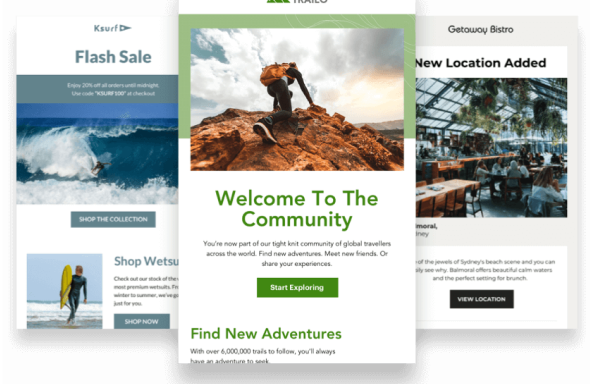


Send transactional emails with confidence
Send your transactional emails and marketing emails, all inside of Campaign Monitor. Keep your brand consistent no matter what kind of message you’re sending.
Learn More
Case Study
Learn how Girls Who Code uses Campaign Monitor to change the tech world for the better.
Learn how
The email platform for agencies
We started out helping agencies with email, so let us help you.