Introduction
Email marketing is a huge opportunity for agencies to build recurring monthly revenue into their client billing, recent roundups put average returns around $36 per $1
It’s ongoing, not project-based. And there’s a strategy to make email marketing even more profitable for agencies: white labeling.
In this article, we’ll cover:
- What white-label email is (and why agencies use it)
- The benefits + common challenges it solves
- Core automations every agency should offer
- How to package/price services profitably
- Compliance & deliverability basics
- Campaign Monitor features agencies rely on
As ad costs climb and cookie-based targeting fades, agencies are shifting toward owned channels—especially email—to create stable, recurring revenue streams. White-labeling makes that possible without technical overhead.
P.S., We reviewed the 11 best white label email marketing platforms in the market right now – check out our top picks here.
TL;DR: Proven Email Marketing Tips for Law Firms
- White-label puts your brand front and center. Clients log into your dashboards and see your reports—trust sticks, churn drops.
- Operations get simpler, margins get better. One branded hub replaces scattered tools, and you control pricing.
- Monetize smartly. Combine platform markups, a monthly management retainer, and premium tiers (automation, design, analytics).
- Ship the core automations. Welcome, nurture, reminders, promos, and re-engagement—built once, reused across clients.
- Keep deliverability clean. Set SPF/DKIM/DMARC, require consent, maintain list hygiene, and monitor performance by mailbox provider.

Before you choose a stack, also compare the top email marketing software for agencies so you can match the right platform to your service model.
What is white label email marketing?
White label email marketing is the ability to customize aspects of an external email service provider (like Campaign Monitor) with your branding and logos. This allows agencies to reap the benefits of a proprietary ESP without having to spend the money and time to build one.
White labeling is sometimes referred to as “private labeling,” but as part of our efforts to be more inclusive, we are choosing to use the phrase “white labeling.”
Who White Labeling Works Best For
- Boutique agencies managing multiple SMB clients with similar needs.
- Marketing teams offering done-for-you retainers (social, content, PPC) that want to add email.
- Large agencies seeking scalable brand consistency across dozens of client accounts
It’s especially powerful when clients already trust your creative direction—white labeling simply keeps that trust visible in every campaign dashboard.
Challenges agencies face with email marketing
| Challenge | Explanation | How Campaign Monitor Fixes It |
|---|---|---|
| Clients see another company’s logo, not yours. | You do all the work—strategy, design, automations—but the credit goes to someone else’s software. Clients see a Mailchimp or HubSpot dashboard and assume you’re just managing a tool, not delivering a full-scale strategy. | White Labeling & Custom Branding: Campaign Monitor lets you fully white-label the platform—your agency’s logo and branding appear everywhere, from dashboards to reports. Clients only see your brand, so you get full credit as their strategic partner. |
| Your team is drowning in logins and tabs. | Every client uses a different ESP. Each has its own quirks, analytics, and permission settings. You spend more time switching dashboards than improving results—and reporting consistency disappears. | Unified Agency Dashboard: Manage all client accounts from a single interface. No more juggling ESPs or multiple logins—everything is streamlined and accessible, so your team can focus on strategy and results instead of admin work. |
| Your profit margins vanish into someone else’s software. | Those $99-per-month tools don’t sound bad until you’re managing 20 clients. You’re paying for platforms your clients think you own—while the profits go elsewhere. | Set Your Own Pricing: With Campaign Monitor’s white-label model, you control the pricing and packages. Clients pay for your branded service, allowing you to keep the profit margin instead of passing it to a third-party SaaS. |
| Clients forget who’s driving results. | When campaign reports display another company’s branding, clients subconsciously credit the tool for performance. You fade into the background instead of being seen as the strategist behind their growth. | Branded Reporting & Dashboards: All client-facing assets—reports, dashboards, campaign previews—feature your agency’s branding. Every result and insight is linked back to your expertise, reinforcing your value and visibility. |
| Small inconsistencies create big doubt. | Every mismatched report, layout, or logo chips away at client confidence. Consistency builds trust; inconsistency quietly kills it. | Auto-Branded & Custom Templates: Campaign Monitor’s auto-branded templates pull in your client’s logo, fonts, and colors instantly. Custom-coded options ensure every email, report, and dashboard is consistent—building client trust through seamless branding. |
| Admin replaces strategy. | Password resets, permission errors, and manual reporting eat into hours meant for creative problem-solving. The more clients you add, the less time you spend on high-value work. | Centralized Admin & Automation: The platform automates and centralizes admin tasks—user management, permissions, reporting—so your team spends less time on busywork and more on strategic, high-impact projects. |
| You’re stuck between “too much” and “not enough” visibility. | Give clients full ESP access and they start changing things you’ll need to fix. Lock them out and they question transparency. A branded, white-label dashboard solves both—visibility without chaos. | Granular Permissions & Client Self-Service: Set precise user roles and permissions for each client. Give them transparent access to results and campaign tools—without risking accidental changes or overwhelming them with options. |
Green Apple Strategy scaled B2B engagement and doubled client open rates with Campaign Monitor
Increase in open rates through data-driven A/B testing
of client campaigns now built in Campaign Monitor
need for external design support, thanks to drag-and-drop templates
With Campaign Monitor, we’re able to create templates once, then swap the content around as needed without having to pull in the help from a designer each time.
Want a tighter workflow? Use our email marketing checklist to standardize client setups and prevent the mistakes that quietly erode margins.
Benefits of White-Label Email Marketing for Agencies
Email continues to outperform other channels — with average open rates of ~21.5%, CTR of ~2.3%, and CTOR of ~10.5%, based on Campaign Monitor’s analysis of 100B+ sends in 2022.
For agencies, white-labeling turns those results into recurring revenue, deeper trust, and stronger retention.
Here’s how:
- Your brand stays front and center. Every dashboard, login, and report carries your agency’s logo—not another platform’s. Clients associate their growth with your brand, not someone else’s software.
- You look like a high-end, proprietary solution. Instead of feeling like a reseller managing third-party tools, you present as a premium provider offering a seamless, all-in-one marketing experience.
- You remind clients of your value every time they log in. Whether you run campaigns end-to-end as a “done-for-you” service or “set-up-only” the framework for them, your branding keeps you top of mind every time they check results.
- You build recurring, scalable revenue. Email is ongoing, not project-based. With white-labeling, you can package platform access, automation, and reporting into retainers that generate predictable monthly income.
- You strengthen client relationships. Owning the experience from creative to analytics positions you as a strategic partner, not a vendor. Clients stay longer and rely on you more deeply.
- You deliver consistent brand experiences. Every campaign, report, and automation looks, feels, and performs consistently—your design standards, your workflows, your results—no matter how many clients you manage.
To measure performance like a pro, track the metrics that actually matter with our email marketing KPIs guide.
What It Means for Your Bottom Line
White labeling doesn’t just streamline client work—it strengthens your business model. You gain predictable monthly revenue, higher profit margins through platform markups, and stronger client retention because your brand—not another platform—owns every touchpoint.
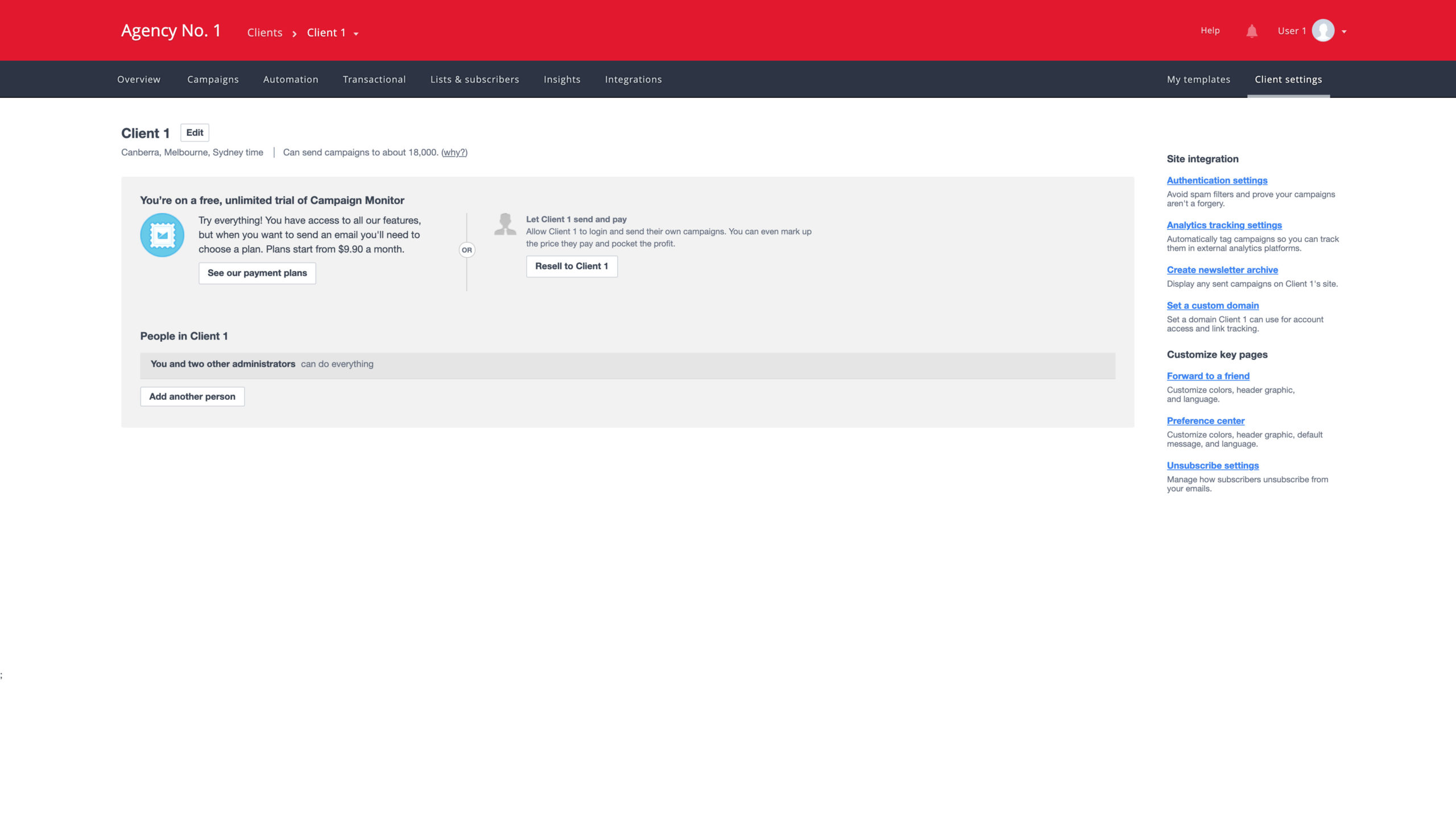
Increase your value with branded email templates for every client
Keeping clients around long-term is all about providing consistent value for their bottom line. One proven way to generate more revenue is through strong visual branding, as consistent branding has been shown to increase revenue by 33%.
So, creating custom, branded email templates for each client is a key way to get them results month after month. With private labeling, you can create custom templates with your clients’ branding (for every client).
This means that it’s easy for either your agency or your clients themselves to quickly create emails that match their branding.
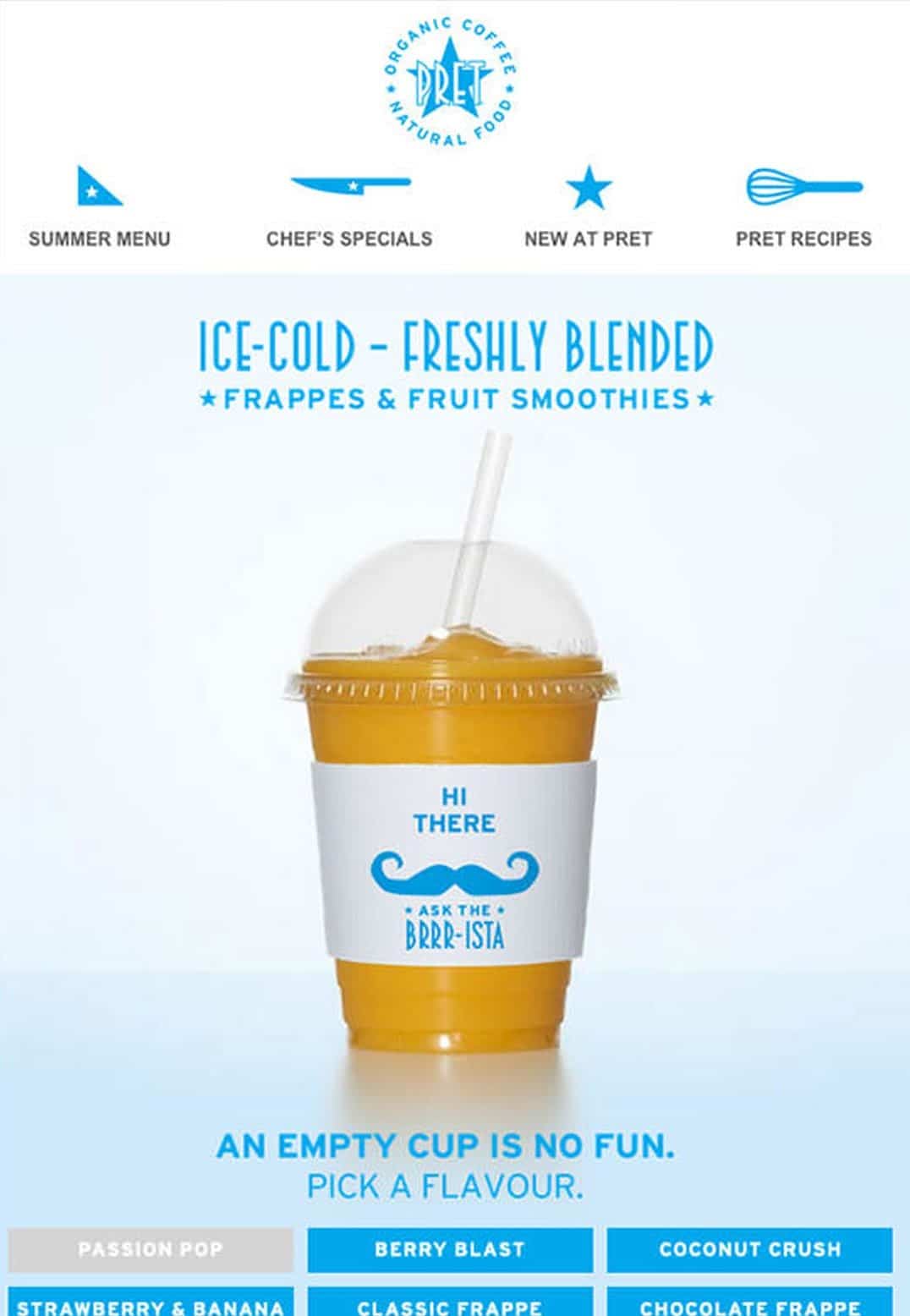
This email from Pret A Manger is a good example of the power of branded emails. The colors, fonts, logos, and layout are easily recognizable as those of the company.
Streamline workflow with all your clients in one place
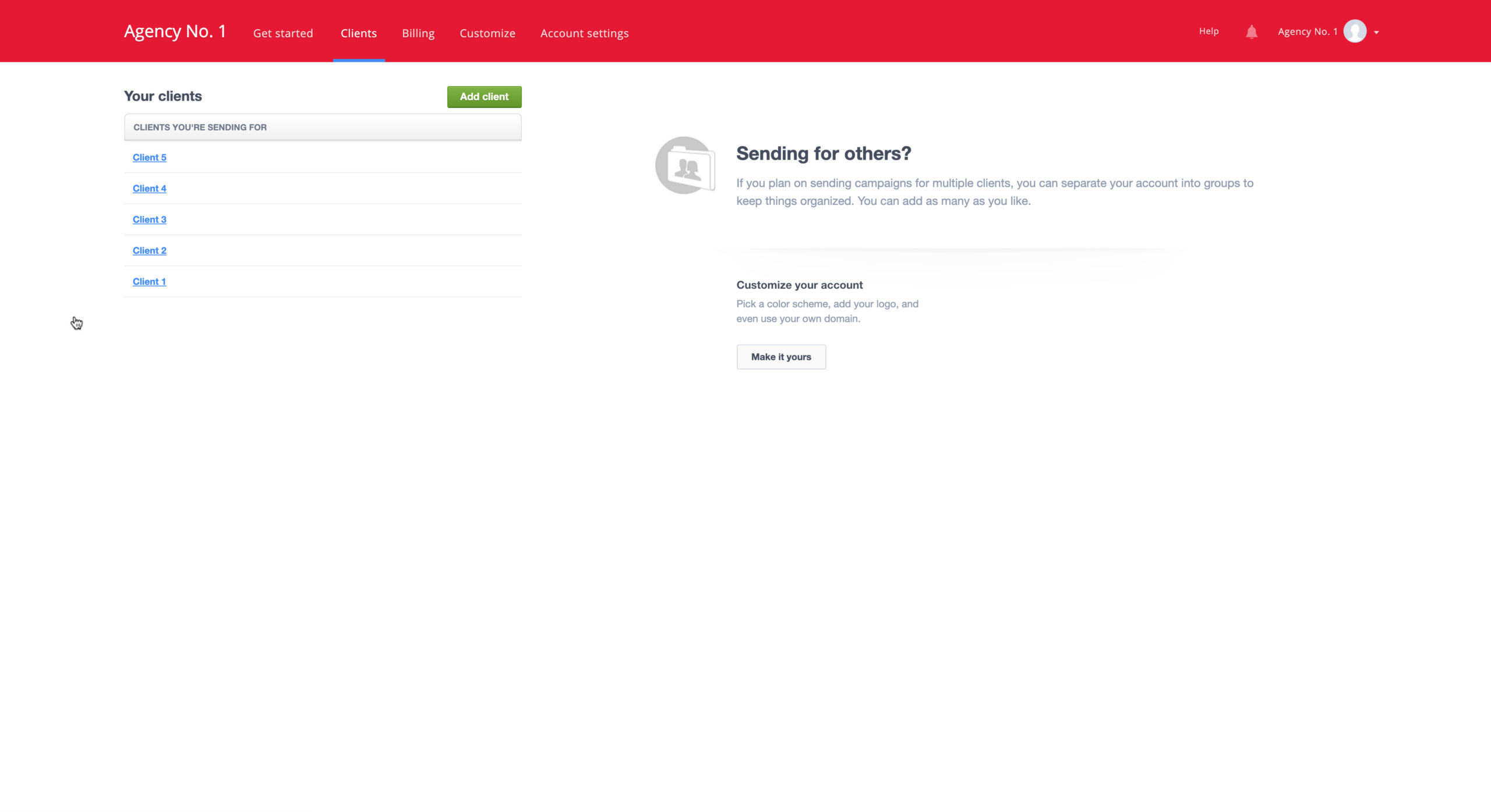
With private labeling, you can create just one agency account and manage multiple client sub-accounts under your account.
This makes keeping your client projects on track much easier for your team. You can quickly switch between client accounts without logging in and out, and you can get a birds-eye view of each client from one place.
It’s important to lessen the administrative burden through smarter tools to save time for billable work. A Sage study found that small to mid-sized businesses in the UK spend an average of 71 days per year on administrative tasks.
So, if you average 5 hours a day on client work, this means missing out on up to 355 hours of billable time.
Bluetent used Campaign Monitor to turn vacation rentals into $50K+ in new revenue
Revenue growth powered by data-integrated automations
Open rate across web subscriptions
Increase in new subscriber sign-ups
Campaign Monitor lets us combine our reservation software with flexible email tools — empowering every client to send branded, data-driven campaigns.
Resell ESP features for a higher profit margin
White labeling allows you to provide your clients with all the features that a robust ESP includes, without the investment of building your own.
Campaign Monitor offers users several helpful features for your clients including:
| ESP Feature | How to Package as a Service | Typical Agency |
|---|---|---|
| Drag-and-Drop Template Builder | Offer “Custom Branded Email Template Setup” — design 1–3 reusable templates for your clients (newsletters, promos, transactional emails) inside your white-label ESP. Include layout, imagery, brand colors, and device testing. | Agencies charge $300–$1,200 per template or $500–$2,000 as a one-time setup for small clients. Larger retainers may include 2–3 templates monthly. |
| Customer Journey / Automation Builder | Sell “Lifecycle Automation Strategy” packages: map and build automated sequences (welcome, cart recovery, post-purchase, re-engagement). Include logic setup and performance monitoring. | Agencies charge $1,000–$5,000 per automation series, depending on complexity (number of branches, triggers, and email volume). |
| Personalization Tools | Offer “Dynamic Content & Personalization Management” — manage personalized subject lines, merge tags, conditional content blocks, and time-zone or behavior-based delivery. | Agencies charge $400–$1,500 per campaign or bundle as part of a premium retainer tier adding ~15–20% to monthly fees. |
| Segmentation & Audience Management | Package as “List Strategy & Audience Optimization” — build smart segments (VIPs, inactive users, geo or lifecycle groups) and maintain deliverability lists. | Agencies charge $300–$1,000 per month per client, depending on list size and frequency of campaigns. |
| Analytics & Reporting Suite | Offer “Email Insights & Optimization Reporting” — deliver monthly reports with open/click data, revenue attribution, and A/B testing insights. Combine with recommendations for next month’s content. | Agencies charge $250–$750 per month as a reporting add-on or bundle it into higher-tier retainers. |
| White-Label Platform Access | Market this as “Managed ESP Access & Support” — clients get access to your white-label portal with branding, support, and billing managed through your agency. | Agencies typically mark up platform costs 25–50% or charge a flat $200–$500/month platform fee per client. |
Your agency will not only improve client satisfaction and results with these features, but it will also be able to markup the cost of the ESP and bill it directly to clients — thereby improving your profit margins.
With marketing agency profit margins averaging just 6-20%, increasing margins is an opportunity to build sustainability into your business.
Ready to white-label email under your own brand?
Private-label email marketing lets you deliver ESP-level features under your agency’s name—adding client value,
recurring revenue, higher margins, and lower admin work.
- Provide robust ESP features without building your own platform.
- Keep clients in your branded dashboards and reports.
- Scale services with reusable templates, automations, and billing control.
Want to explore other options before pulling the trigger? Check out our buyer guide which reviews the 11 best white label email marketing platforms in the market right now.
Automations every agency should offer (With examples)
Once you have set up your private label email marketing service, start creating branded automations for your clients. While client needs differ, most clients will require at least one automation of each of the following types. Let’s take a look.
Welcome email automation
Why it works: First impressions that set tone and trust.
A welcome email automation is a sequence of emails sent to new subscribers as soon as they join your list.
The purpose of a welcome sequence is to confirm the subscription, welcome the subscriber to the list, and set expectations for what’s to come. And the data shows that people want to receive welcome emails:
Welcome emails have a remarkable 91.43% open rate, which is about 4x the average.
To create a winning welcome email sequence, make sure your automation follows these best practices:
- Asks for information from readers to allow for segmentation later on
- Encourages engagement by asking for replies and shares
- Uses personalization to make the reader feel special
- Sends promptly in the week or so following sign-up
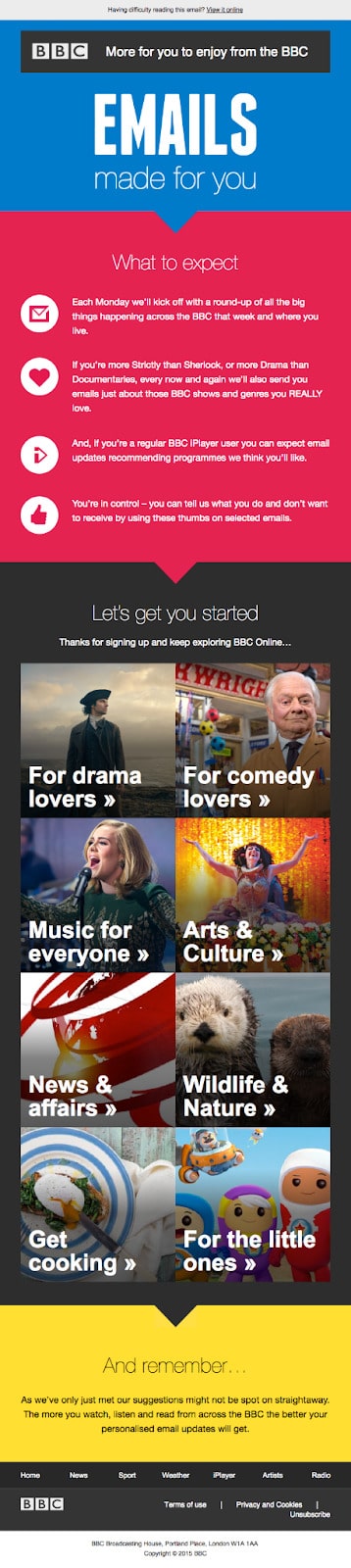
Example: This welcome email from the BBC does an excellent job of setting expectations for their new email subscribers:
Lead-nurturing email automation
Why it works: Converts “not now” into “yes.”
According to data from CRO firm Invesp, almost 80% of new leads do not result in sales. This is where lead-nurturing email automation comes in.
Lead-nurturing email automations are email sequences sent to people who have expressed some interest in working with or buying from your client but are not yet ready to do so.
Leads may include people who have completed a sales call but not bought, have completed an interest form but not taken the next step, or have visited your website but not made a purchase.
We recommend following this 5-part lead-nurturing email sequence:
- Value-add email – Give readers a quick qin
- Problem email – Show that you understand your reader’s pain points
- Solution email – Explain how your company can help
- Case study email – Share results you’ve gotten for past clients or customers
- Sales email – Directly ask for the sale (possibly offering a discount)
Example: This lead-nurturing email from Nura establishes that they understand their target audience’s biggest pain point: The challenge of finding headphones that work for you:

Reminder email automation
Why it works: Converts “not now” into “yes.”
Reminder automations nudge readers to complete key actions—pay invoices, send information, attend meetings, or renew subscriptions.
They keep events on track without manual effort and ensure clients look professional with timely, helpful communication.
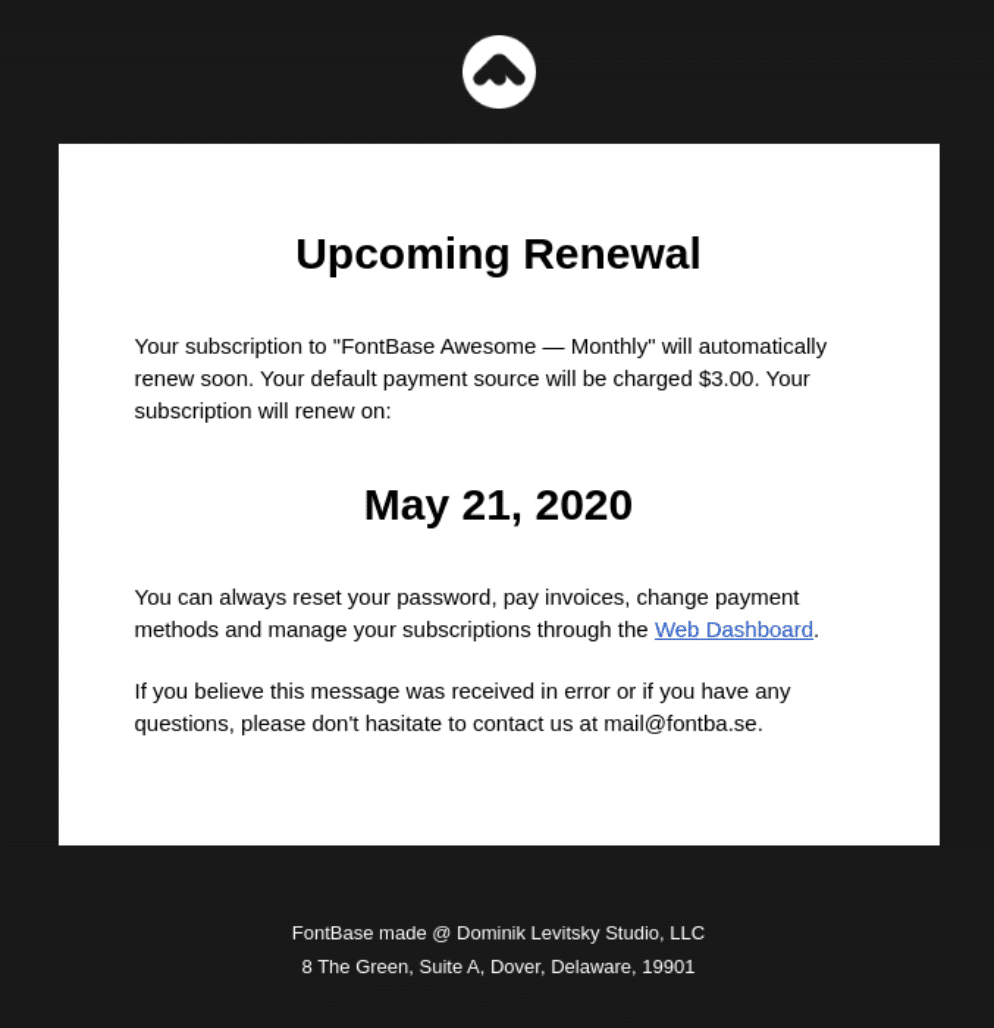
Example: Fontbase uses this reminder email automation to let subscribers know that their renewal is coming up, reducing failed payments.
How to apply it: Create a universal “Event/Deadline” reminder blueprint with variable dates and dynamic fields.
Sales email automation
Why it works: Builds urgency and boosts conversions.
A sales email automation (sometimes called promotional emails) is a sequence of emails that encourage subscribers to buy a product or service.
Email regularly outperforms other channels for conversion, so it should anchor launch plans.
When your client is launching something new, email marketing should be a key part of the marketing strategy because email has been shown to have conversion rates 3x higher than social media and generate the highest ROI of all channels.
To optimize your sales email automations, it’s important to improve your email copywriting skills. Get started with these quick tips:
- Ensure your subject line is short and benefit-focused
- Make your preview text click worthy
- Write easy-to-understand body copy that clearly explains the offer
- Reinforce the promise in your button CTA
- Avoid spam-trigger words like “free” or “buy”
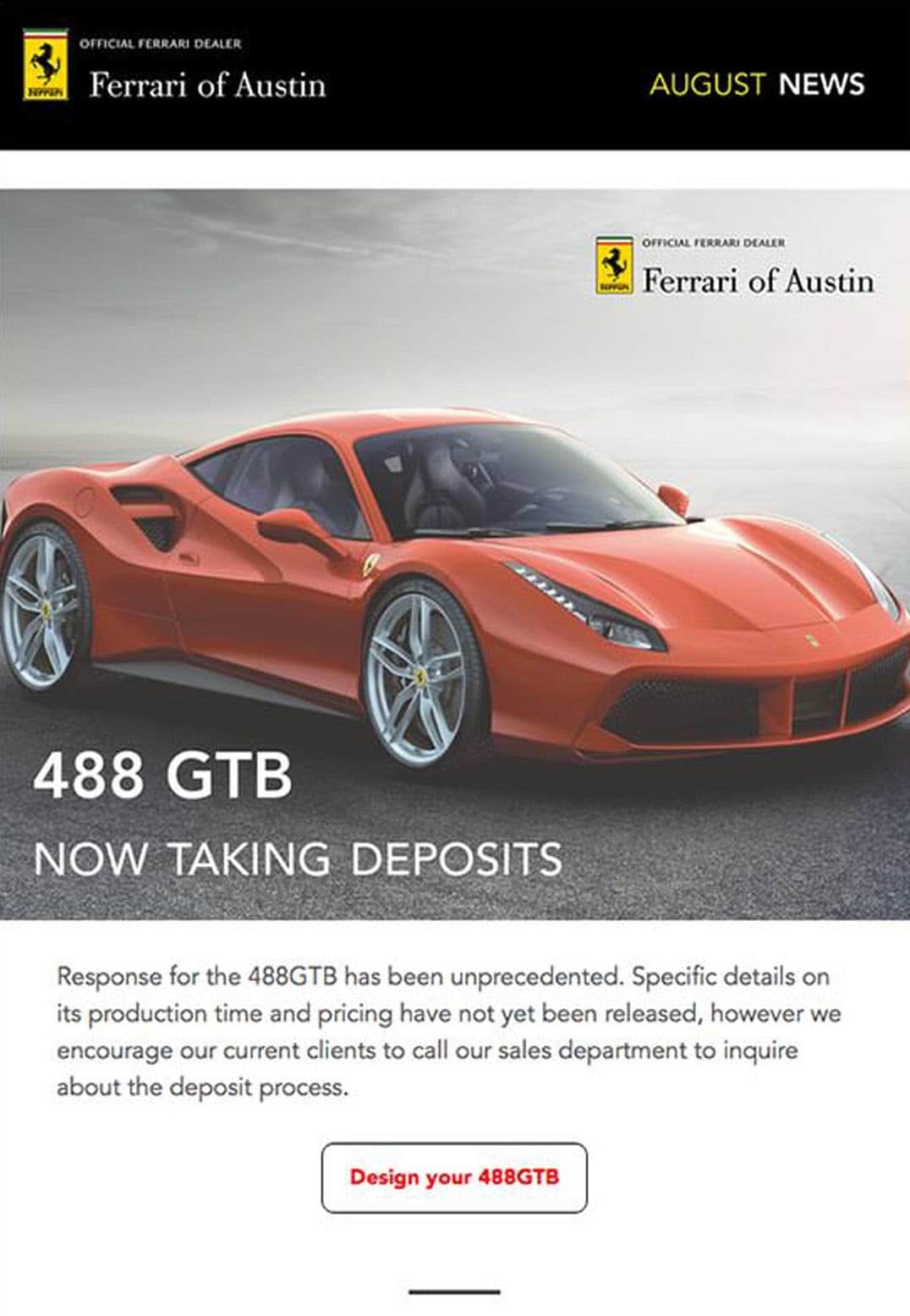
Example: Ferrari uses this sales email automation to generate buzz around the release of their new model.
How to apply it: Maintain a standard “Tease → Reveal → Offer → Last chance” flow and tailor the creative.
Re-engagement email automation
Why it works: Revives cold subscribers without starting over.
Some subscribers will go inactive. Re-engagement sequences try to spark opens/clicks again—or clean the list if interest is gone. These work best when they nurture, not hard-sell.
Our research found that re-engagement email automations perform best when they focus on nurturing subscribers and encouraging engagement (like replies, opens, and clicks) vs. sales.
Here are the best practices:
- Be transparent with subscribers by telling them directly why you are emailing (i.e. to see if they still want to receive emails
- Offer a promotion or discount to get them to re-engage
- Limit re-engagement emails to short sequences to not overwhelm subscribers
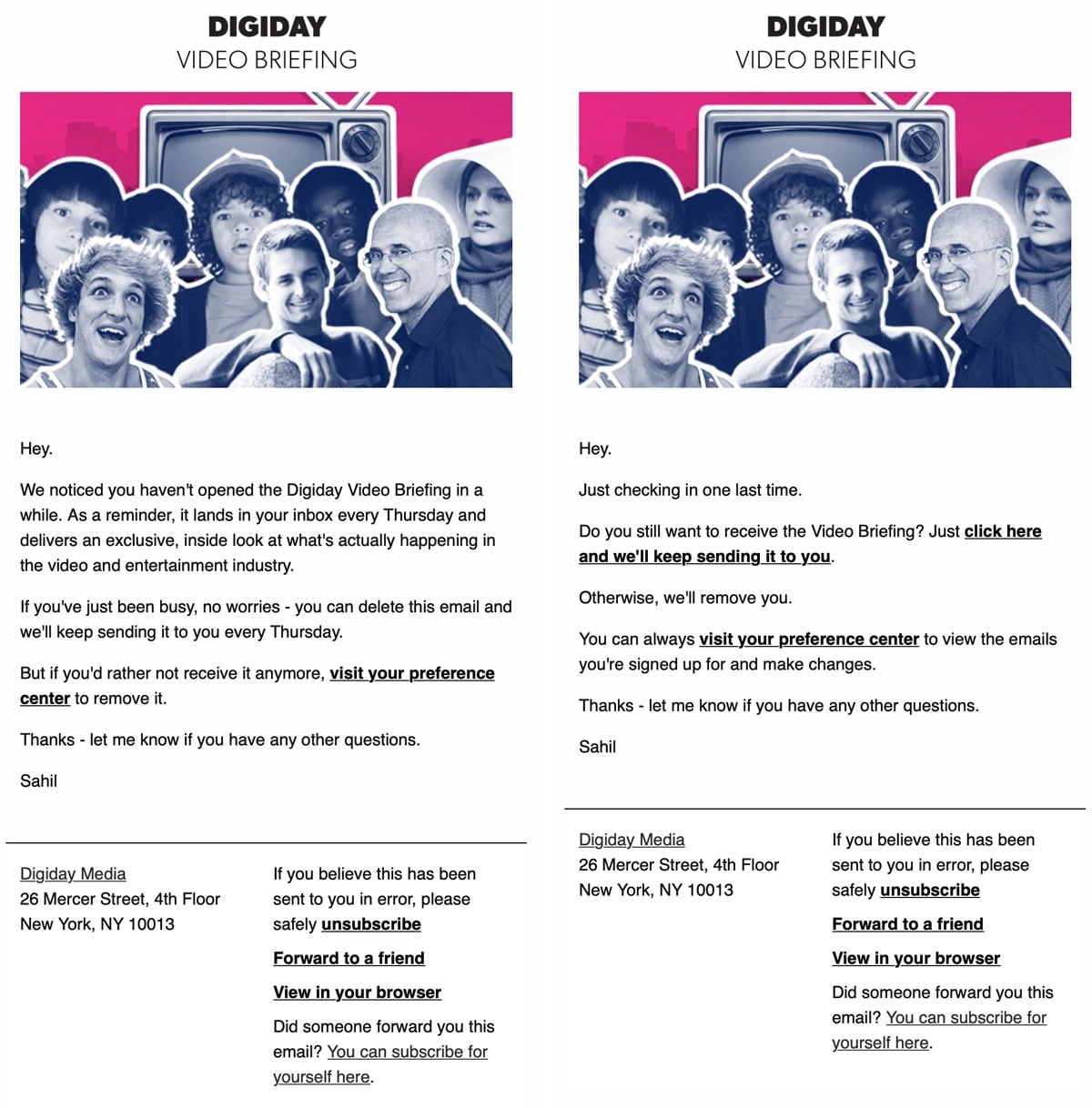
Example: Digiday uses this re-engagement email automation to ask subscribers if they are still interested in receiving emails. If subscribers don’t re-engage, they are safe to remove them from the list.
How white labeling works (Quick setup)
Move from concept to client-ready in a few steps:
- Pick a white-label–ready platform. Confirm support for branded logins, multi-account control, and flexible billing.
- Brand the experience. Add your domain, logo, and colors so clients sign in through your agency.
- Create client sub-accounts. Set permissions by role (owner, marketer, analyst) to keep work and data separated.
- Set pricing rules. Apply per-client markups or choose direct billing to align with your retainers.
- Ship the starter kit. Load reusable templates, core journeys/automations, and a simple access guide so clients know where to review results.
Result: a branded, scalable setup that’s ready for campaigns without custom development.
Switchback Email Marketing scaled vacation-rental ROI with Campaign Monitor’s flexible platform
Revenue growth driven by automated booking campaigns
Open-rate improvement from re-engagement segments
For full customization, segmentation, and automation
The Campaign Monitor team feels like an extension of ours—helping us deliver high-performing, fully customized client solutions.
Campaign Monitor is the premier white-label email marketing solution on the market
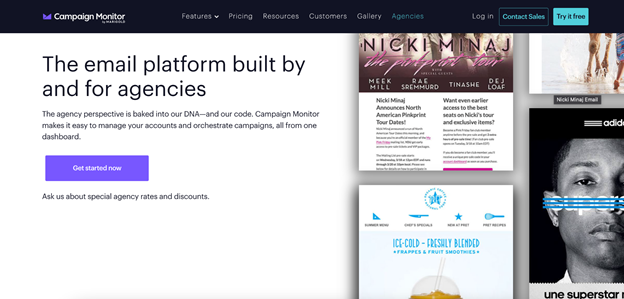
Do it all in one platform. Campaign Monitor gives agencies branded logins, multi-account management, flexible billing, drag-and-drop automation, segmentation, and analytics for seamless white-label email management.
It’s perfect for agencies wanting to deliver email services under their own brand—and manage multiple clients efficiently.
Key agency features include:
- Multi-account management: Manage multiple client sub-accounts from a single dashboard with custom permissions and performance overviews.
- Branded logins & white-labeling: Replace Campaign Monitor’s branding with your agency’s own domain, logo, and colors for a seamless client experience.
- Flexible billing & markup: Add client markups, bill directly, or bundle email services into retainers—keeping pricing and profit under your control.
- Drag-and-drop automation builder: Create and manage automations, journeys, and campaigns for every client—no code required.
- Segmentation & personalization: Build advanced customer segments and personalize messages at scale to boost engagement and conversions.
- Template management: Create reusable, on-brand templates your clients can easily customize without breaking design consistency.
Manage every client account, automation, and report from one branded dashboard. See how Campaign Monitor simplifies agency email management.
How agencies make money from white-label email marketing
White labeling turns email into predictable, recurring revenue. Here are proven ways to package and price—with sources to back it up:
- Resell platform access with your own markup. Set a custom markup on each client account and let the platform handle billing and profit transfers automatically—keeping pricing consistent and margins predictable.
- Add a flat monthly management fee per client. Pair your markup with a retainer for ongoing work (strategy, builds, reporting). Benchmarks show common retainers in the $2–7.5k+/month range depending on scope and volume.
- Offer premium tiers for strategy, design, and analytics. Create add-ons for advanced automation strategy, template design, testing, and executive reporting. Campaign Monitor supports this model with agency billing options (bill clients directly, or let CM invoice on your behalf).
Combining markup + management retainer + premium tiers creates durable recurring revenue and increases client lifetime value—while Campaign Monitor’s built-in billing options make the operations simple.
For deeper industry trends, pricing benchmarks, and performance insights you can show clients, read our email marketing report guide.
Deliverability & compliance: What agencies should know
Strong deliverability protects your clients’ reputations—and yours. Build these steps into every account you manage:
- Authenticate every sending domain: Set up SPF, DKIM, and DMARC per client to prove legitimacy and prevent spoofing.
- Isolate reputations where needed: Use dedicated sending domains (or segmented subdomains) for high-volume or risk-sensitive clients so one sender’s issues don’t impact others.
- Respect the rules, everywhere: Follow GDPR/CAN-SPAM (and local equivalents). Obtain consent, include a physical address, honor opt-outs immediately, and store consent records.
- Maintain clean lists: Suppress hard bounces, remove spam complaints, and run periodic re-engagement for inactive contacts to keep signals positive.
- Monitor signals by domain: Track delivery, opens, clicks, and bounces per mailbox provider (e.g., Gmail, Outlook) to catch issues early.
Campaign Monitor has built-in tools to guide domain authentication, manage unsubscribe/compliance defaults, and surface deliverability by domain so your team spends less time on setup—and more time improving results.
Ready to white-label email under your own brand?
Private-label email marketing lets you deliver ESP-level features under your agency’s name—adding client value,
recurring revenue, higher margins, and lower admin work.
- Provide robust ESP features without building your own platform.
- Keep clients in your branded dashboards and reports.
- Scale services with reusable templates, automations, and billing control.


The top drag and drop
Drag and drop content into place with the Email Builder, then launch your next campaign.
Learn More
Case Study
Learn how Girls Who Code uses Campaign Monitor to change the tech world for the better.
Learn how
The email platform for agencies
We started out helping agencies with email, so let us help you.